Umesh Shankara Gowda
Founder
Works across software and the physical palm oil supply chain, and owns Bio Green Wax, a trader of palm oil and palm-derived products. Palm Oil Economics is his idea.
LinkedIn (opens in a new tab)

The counterparty file
Sourcing inquiries are fulfilled through Bio Green Wax, the trading company our founder owns — you know where we earn before you read a single price. Everything else on this page can be checked without asking us: the record, the people, and whether this operation is alive today.
Palm Oil Economics is the brainchild of Umesh Shankara Gowda, an entrepreneur working across two fields that rarely overlap: software, and the physical palm oil supply chain. He is also the owner of Bio Green Wax, a company trading palm oil and palm-derived products.
It was founded together with and backed by Hantash Najam, whose funding turned the idea into something that could actually be built. A public price record is not a quick project — it only becomes useful after months of collecting data nobody is paying you for, and that stretch is precisely where this kind of work usually dies.
That combination is the reason this site exists. Buyers and sellers of palm oil and its derivatives deal with the same frictions on every transaction — prices that are quoted but not published, specifications that mean different things to different refineries, and a market where the person with the information is usually the person on the other side of the trade. Someone who has only built software would not know which of those problems actually costs money. Someone who has only traded would not build a public price record to fix it.
The idea was always larger than a price feed. Palm oil is the most consumed vegetable oil on earth and sits in something close to half the products on a supermarket shelf, yet almost everything worth knowing about it lives somewhere private — in a trader's inbox, a refinery's specification sheet, a subscription terminal priced for institutions. What reaches the public is usually either a headline with no numbers or a number with no explanation.
So Palm Oil Economics is built as a knowledge hub, not a dashboard. How the crop is grown, milled and refined, and how it grew into the industry it is today. What each product and derivative actually is, and what changes commercially when one line on a specification moves. What happened in the market this morning, written up every day. And underneath all of it the numbers themselves — MPOB statistics back to 2000, stocks, exports, biodiesel mandates, rainfall across the palm belts, the competing oils that set the ceiling on price — published in full, free, in six languages, for anyone who needs them.
The forecast is one page of that, and deliberately not the front door. A number predicting next week is worth very little to someone who does not yet understand why this market moves; the reference material is what makes the number legible. Both are free, and neither asks for an email first.
The commercial relationship, stated plainly: the market data, forecasts and MPOB statistics on this site are free and open to anyone, and are published whether or not they suit a seller. When a buyer asks us to source a product, that inquiry is fulfilled through Bio Green Wax or through refineries and processors we work with, and the business earns from that. We would rather you knew that before you read a price than after.
It is also why the accuracy record below is published in full, including the runs that went badly. A site with a commercial interest asking to be trusted on numbers has exactly one honest option, which is to show you when its numbers were wrong.
See the published accuracy recordWho is behind this
Founder
Works across software and the physical palm oil supply chain, and owns Bio Green Wax, a trader of palm oil and palm-derived products. Palm Oil Economics is his idea.
LinkedIn (opens in a new tab)Founder
Funded the work through the stretch where a public price record earns nothing — the months of collecting data before it becomes useful to anyone.
LinkedIn (opens in a new tab)Every link below leaves this site. We would rather you verified than believed.
Judge us by the record

We would rather be checked than believed. The benchmarks we quote, the outlook we publish and the reasoning behind it are all open, with the underlying figures visible and every source named. Read them first and decide whether we understand this market well enough to source in it.
We also publish how well the model actually does. The 7-day outlook is regenerated every hour and then scored against what the market really did, and that scorecard stays public whether it flatters us or not. Anyone can publish a forecast; the record of being wrong is the part worth reading.
See how the model has performed
What to expect when you write to us. A person reads every brief and replies within one business day, even when the answer is that we are not the right route for it. If a requirement is outside what we can source properly, we will say so rather than pass it on and hope.
Direction hit rate, 30 days
49%
scored daily against actual closes, 24 independent forecasts
Average error, 30 days
12.14%
vs 10.63% for predicting no change — the benchmark we must beat
Worst graded run, last 12 months
-0.18% vs actual +4.86%
2026-08-21 · graded poor · published anyway
Every figure above updates automatically and can be checked in full, day by day, on the accuracy record — including the runs that went badly. A site with a commercial interest asking to be trusted on numbers has exactly one honest option, which is to show you when its numbers were wrong.
Sourcing partnership
Companies planning to buy palm oil or its derivatives can engage POE as a sourcing partner. We support requirements for every product in the POE catalogue, related palm-derived products not yet listed, and customised products developed around a buyer's application or specification.
A custom request may involve a defined palm blend, melting profile, cloud point, iodine value, FFA or moisture limit, fatty-acid profile, physical form, packaging format or another agreed technical parameter. The sourcing brief determines which refinery, manufacturer or specialist processor is appropriate.
See the full product and derivative catalogue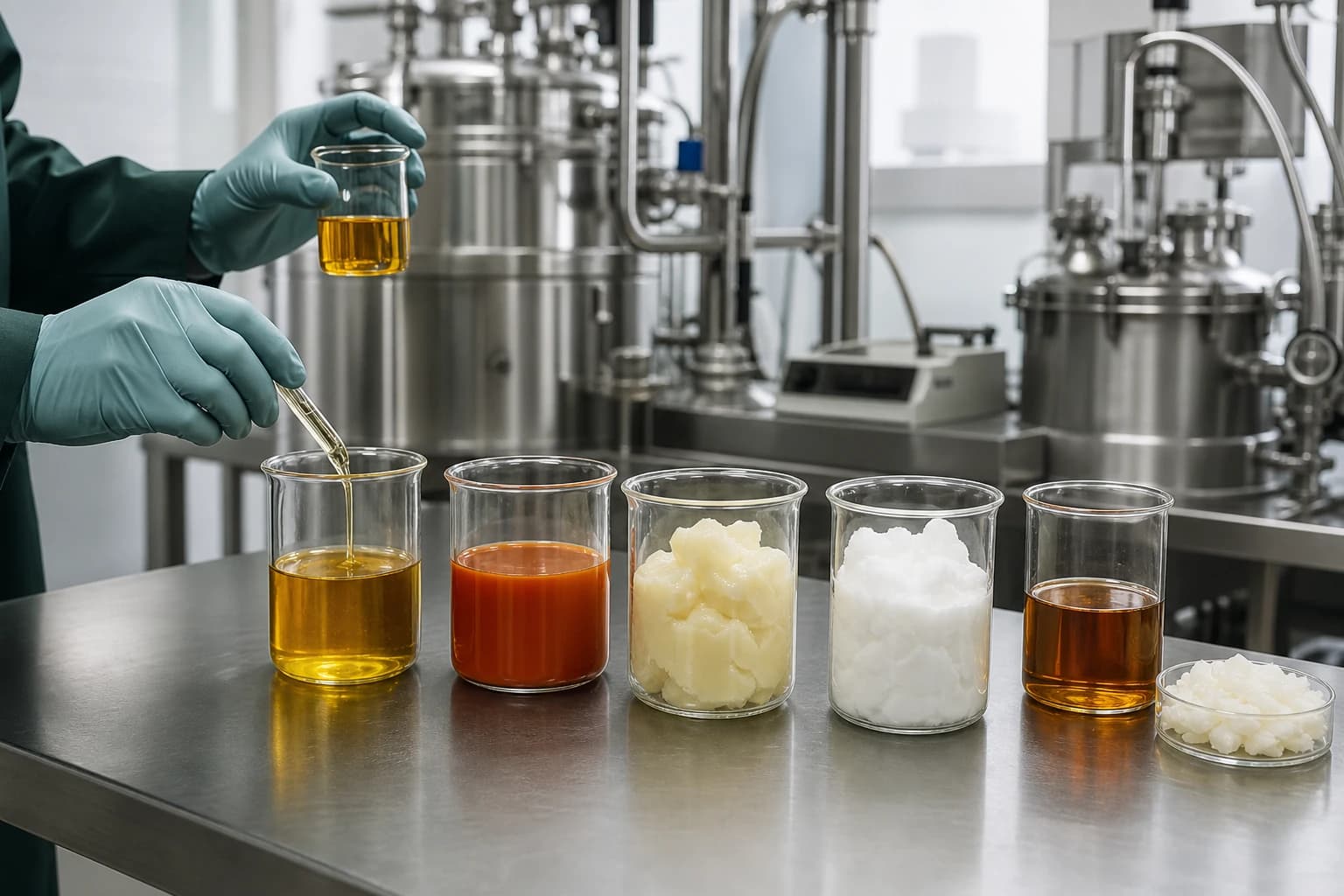
What we can source
CPO, CPKO, RBD palm oil, palm olein, palm stearin, kernel fractions and every product currently listed in our catalogue.
Specialty and confectionery fats, shortenings, oleochemicals, fatty acids and alcohols, glycerine, soap noodles, surfactants, biodiesel, biomass and related products.
Palm blends, application-specific formulations, target physical or chemical parameters, tailored packing and other buyer-defined specifications.
How the sourcing desk works
Each engagement starts with the buyer's actual application and delivery needs, not simply a product name.
We capture the product, application, grade or blend, technical specification, volume, destination, incoterm and delivery window.
We use current benchmarks and supply context to identify suitable origins, processors and a commercially realistic sourcing route.
We match the inquiry to suppliers, refineries, manufacturers or industrial partners whose stated capabilities fit the brief.
We help coordinate specifications, samples, certificates of analysis, packing, commercial terms and independent inspection requirements.
POE remains the communication link as the parties progress through documentation, inspection, logistics and agreed shipment milestones.
A link between qualified counterparties
POE is designed to connect genuine commercial requirements with relevant production capability, reducing unproductive inquiries for buyers and suppliers alike.
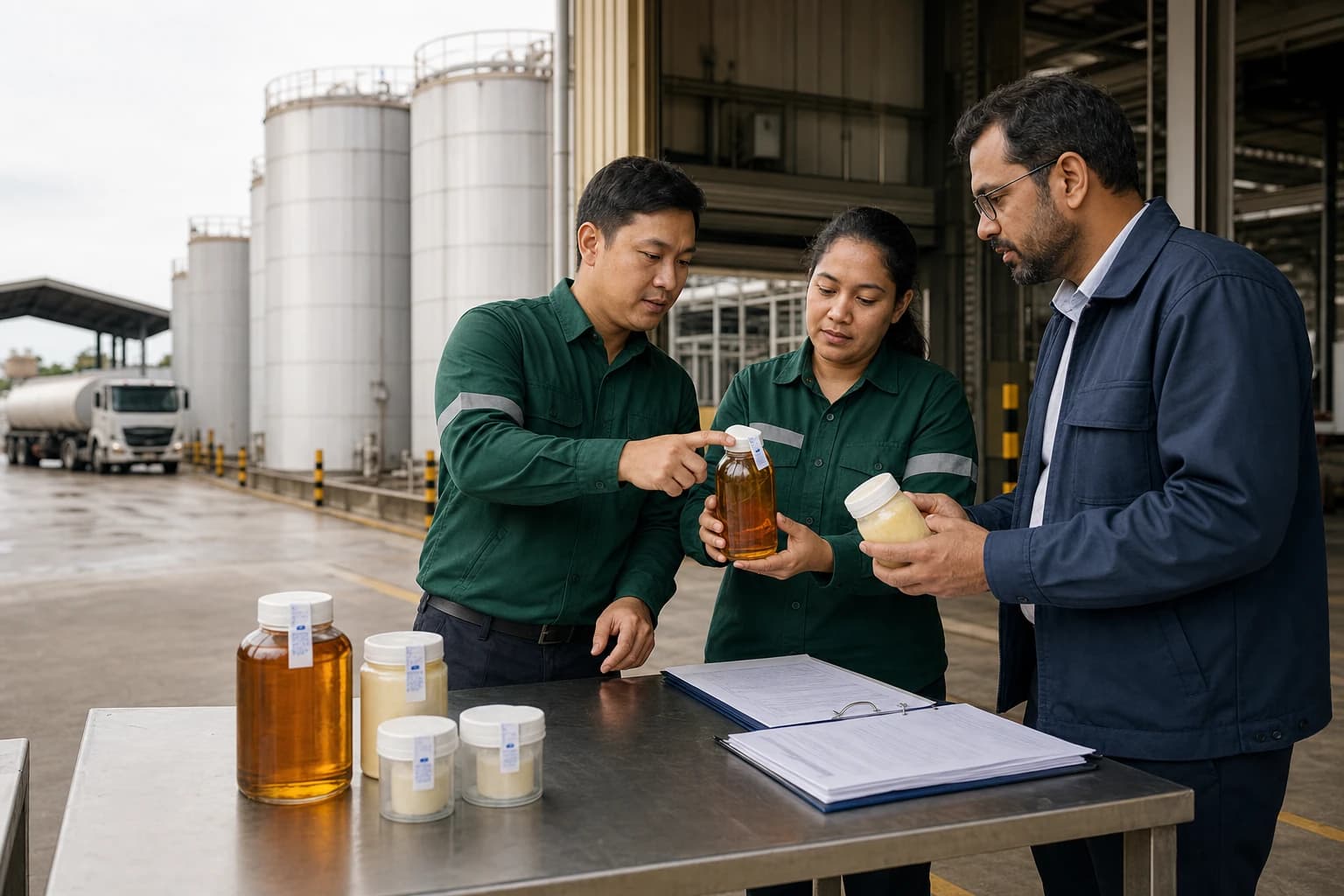
What verification means: POE reviews available company, contact, requirement and capability information before progressing an introduction. Verification is not a guarantee of creditworthiness, product quality or contractual performance. Transaction-specific due diligence, product testing, independent inspection and legal review remain the responsibility of the contracting parties.
Start the conversation
What happens to your brief: it gets a reference code and a confirmation email the moment it arrives, and no detail of it is forwarded to any supplier until you approve the introduction. We hold no proprietary market positions, so there is no book to trade your information against.
Fastest — 30 seconds
Two lines is a fine first message — “are you real, can you do RBD olein to Chennai?” counts. The template below is prefilled for you.
Open WhatsAppThree answers
Full specification
Product, grade, specifications, volume, target price, incoterm, destination and timeframe — for the buyer who already has the spec sheet open. Or email it directly to [email protected].
Open the full briefWhichever door you pick: a person replies within one business day — including when the answer is that we are not the right route. Every inquiry gets a reference code and a confirmation email the moment it arrives.