
Malaysian crude palm oil futures held near $1,146 per tonne, up 0.1% on the session, with the ringgit at 4.04 per dollar. The market is balancing a firm near-term tone against a supply picture that is more nuanced than headline strength suggests.
Production and stocks: the July baseline
Malaysia's July data from MPOB showed CPO output at 1,792,979 tonnes, up 9.4% month-on-month, while closing stocks rose 7.2% to 1,429,316 tonnes. Exports climbed 14.5% to 1,392,178 tonnes, a strong month that helped absorb some of the added supply. Imports fell sharply to 49,566 tonnes, down 51.9% month-on-month, reflecting reduced inter-country flows.
The stock build is notable. Even with robust export demand, inventories expanded, pointing to a market that is not yet tight at the Malaysian level. The FFB reference price rose 1.2% to RM 49.50, a modest gain that suggests upstream returns are improving but not accelerating.
Weather: El Niño bites in Indonesia
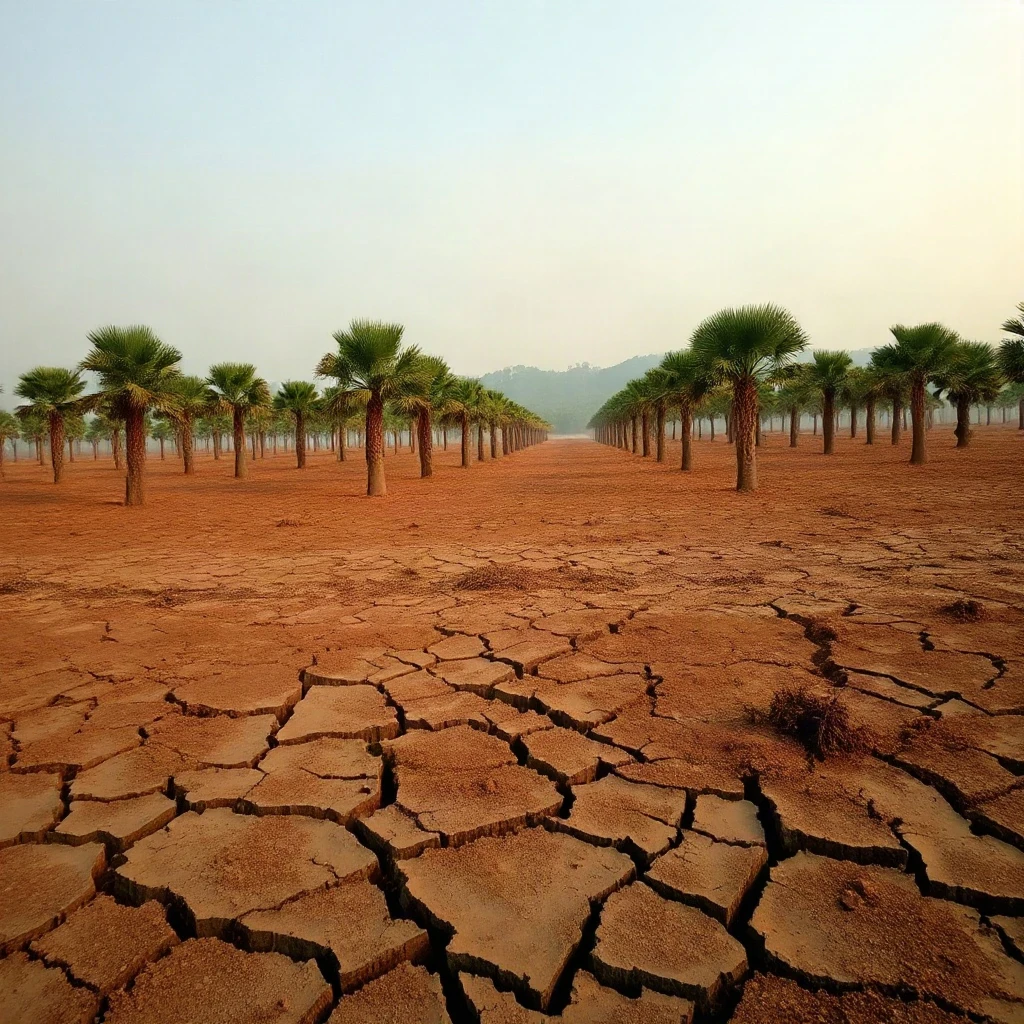
ENSO conditions are firmly in El Niño territory, with an ONI of +1.4. Rainfall anomalies are already visible: Sumatra and Kalimantan are dry, and both are core production zones for Indonesia, the world's largest palm oil producer. Malaysian growing areas are less directly flagged in the current data, but regional dryness tends to spill over.
Dry weather typically curbs yields with a lag of several months. The current trajectory implies that Indonesian output growth could slow into late 2026 and early 2027, while Malaysian production may face similar pressure if dryness persists into the seasonal peak. For now, Malaysia's July numbers show no immediate damage, but the risk is forward-looking.
Global structure: two producers, one constraint
World palm oil supply remains concentrated. Indonesia and Malaysia together account for roughly 85% of global output. Indonesia's reference price, at about $1,008 per tonne, sits below the Malaysian benchmark and the World Bank's global indicator of around $1,101, reflecting different domestic pricing and export levy structures.
Biodiesel policy is the other major constraint. With Brent crude near $95 per barrel, biodiesel blending economics are more favorable, and Indonesia's push toward higher blends—B50 in particular—could divert more domestic supply away from export markets. That would tighten global availability even if production holds up.
What would shift the picture
For the supply outlook to turn decisively bearish, Malaysia would need to sustain or beat July's production pace through the seasonal peak, and Indonesia would need normal rains to return quickly. Neither is guaranteed. For a bullish shift, faster B50 implementation or a deepening of dry conditions in Sumatra and Kalimantan could push prices toward $1,180, while profit-taking or weak export demand could test $1,120 support.
Buyers should watch three things: monthly rainfall data for Sumatra and Kalimantan, MPOB's August stocks and production prints, and any official announcements on Indonesian biodiesel mandate timing. Our model outlook sees CPO consolidating with an upward drift over the next seven sessions, with daily volatility near 0.7% and a published path of +1.5% over that period.