Indonesia B50 biodiesel mandate reshapes palm oil supply-demand outlook
Regulatory shifts in Indonesia and India create new dynamics for palm oil buyers and suppliers.
Full story — Page 2 ▸
A new edition every morning at sunrise over Jakarta (today, 05:56 WIB). Pick a front page to read the full paper — every edition is kept in the archive.
Market eyes Malaysia's tight supply, Indonesia's biodiesel mandate, and India's festival-driven import surge.
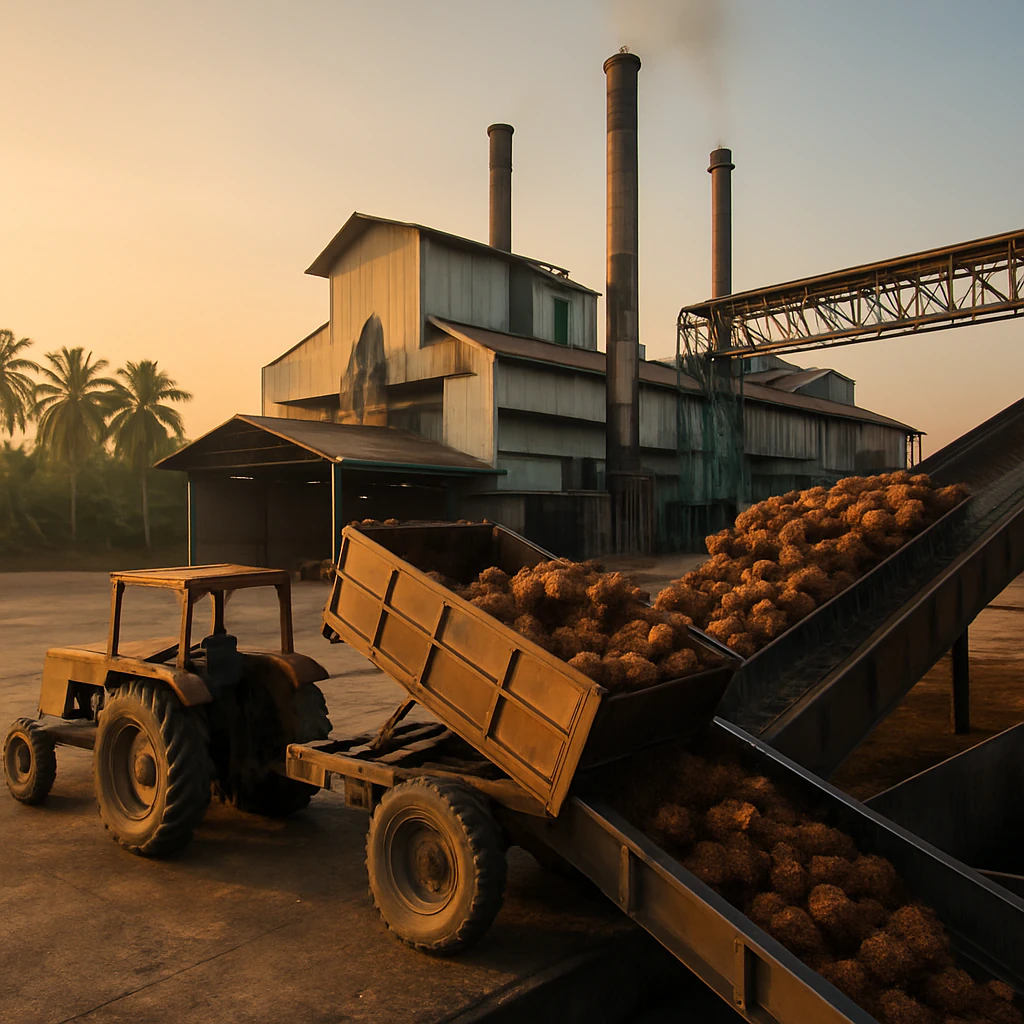
Palm oil futures are trading near three-month highs this week, supported by a confluence of supply-side constraints and policy-driven demand. Malaysian benchmark contracts closed higher on supply squeeze concerns, while the broader vegetable oil complex firmed on stronger crude oil and rival edible oil prices.
Malaysian palm oil production remains under pressure from persistent labour shortages and ageing trees. The Malaysian Palm Oil Council has flagged that crude palm oil prices are likely to stay within a RM4,400–RM4,650 per tonne range for August, reflecting a market that is balanced but vulnerable to weather disruptions. High CPO prices are expected to extend, according to industry analysts, as inventories remain relatively lean heading into the second half of the year.
Indonesia’s formal launch of the B50 biodiesel programme has added a structural demand layer to the market. The mandate, which requires 50% palm oil-based biodiesel blending, is set to absorb additional domestic supply and tighten export availability. India’s central bank has explicitly linked the broad-based rise in edible oil prices to increased biofuel use, citing Indonesia’s move as a key factor.
India, the world’s largest vegetable oil importer, is poised to see a sharp uptick in edible oil imports between July and October as buyers stock up ahead of the festive season. This comes after a 29% year-on-year decline in imports in June. The surge is likely to support palm oil prices, though the country is also grappling with rising duty-free imports from Nepal, which have surged 548%, raising concerns among domestic processors.
Geopolitical risks continue to underscore India’s heavy reliance on imported edible oils, with supply chain disruptions remaining a latent threat. Meanwhile, palm oil’s correlation with crude oil remains intact; stronger crude prices improve the economics of palm-based biodiesel and provide a floor under the vegetable oil complex.
For the coming weeks, the market is likely to remain rangebound but with an upward bias. The convergence of Malaysia’s supply squeeze, Indonesia’s B50 implementation, and India’s pre-festival restocking creates a supportive backdrop. However, any signs of slower-than-expected biodiesel uptake or a rebound in Malaysian production could trigger a correction.
Takeaway for buyers: Track real-time flows under Indonesia’s B50 mandate and Malaysia’s monthly production data—these two variables will determine whether the current price plateau holds or breaks higher.
Sources: Deccan Chronicle; Finimize; Business Recorder; livemint.com; Business Recorder; finance.biggo.com
Regulatory shifts in Indonesia and India create new dynamics for palm oil buyers and suppliers.
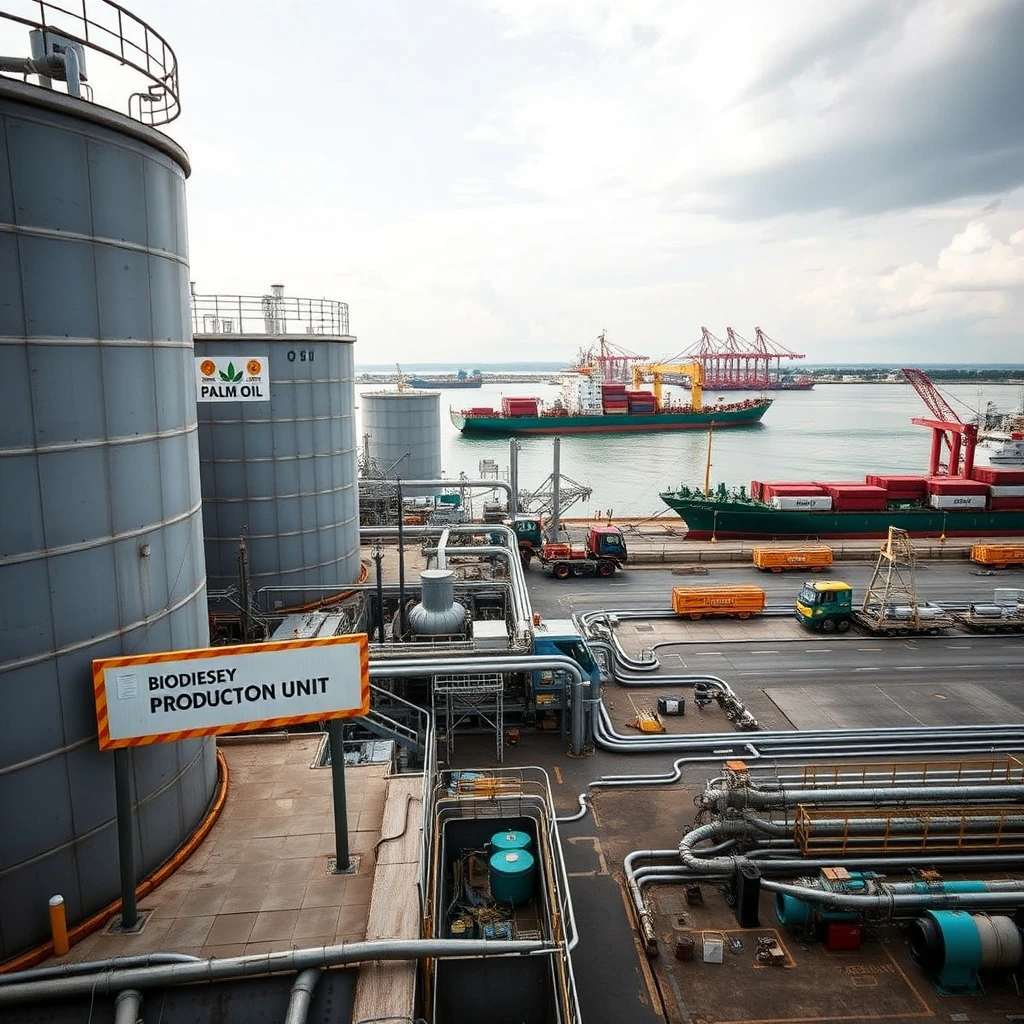
Indonesia’s launch of the B50 biodiesel programme in mid-July marks a decisive step in biofuel policy, locking in structural demand for palm oil as a feedstock. The mandate, which raises the biodiesel blend to 50%, directly boosts domestic palm oil consumption and tightens export availability. This regulatory push is one of the key factors behind palm oil prices hitting a three-month high, as the market prices in sustained demand from Indonesia’s energy sector.
Palm oil futures rallied to levels not seen since April, propelled by supply risks and the biodiesel demand prospects opened by B50. Traders are now weighing how much additional crude palm oil will be diverted from export markets to meet the mandatory blend. The price move reflects a market reassessing the long-term demand baseline for palm oil, with the biofuel channel becoming a non-discretionary consumer.
The Reserve Bank of India recently linked the broad-based rise in edible oil prices to the expansion of biofuel mandates, specifically citing Indonesia’s B50 policy. The central bank’s analysis underscores a growing concern for food-importing nations: when palm oil – the world’s most-traded edible oil – is increasingly channelled into fuel, the spillover effect raises costs for cooking oils across the board. For compliance-minded buyers, this signals a need to hedge against policy-driven price volatility that is not purely weather- or supply-driven.
Meanwhile, Indian palm oil producers face a separate regulatory headache from duty-free edible oil imports routed through Nepal. These imports, which use preferential trade agreements to bypass Indian tariffs, are undercutting domestic processors at a time when global palm oil prices are already elevated. The combination of a rising Indonesian demand floor and competitive pressure from Nepali imports creates a difficult operating environment for Indian refiners and a complex sourcing puzzle for buyers.
For procurement teams, the takeaway is clear: biofuel mandates are no longer a marginal factor but a core driver of palm oil demand. Compliance-minded buyers must now monitor not only crop forecasts and export policies but also fuel-blending targets and their enforcement. The B50 rollout in Indonesia, with its potential for similar moves in other producer countries, means that structural demand from the energy sector will remain a persistent bullish factor. Buyers should consider longer-term contracts and diversification of origins to mitigate concentration risk. The latest policy developments reinforce the need to integrate energy policy analysis into palm oil supply-chain planning.
Sources: Oils & Fats International; The Jakarta Post; Business Recorder; livemint.com; livemint.com
A technical explainer for buyers: saponification, refining, noodling and commercial factors that shape the soap noodle market.
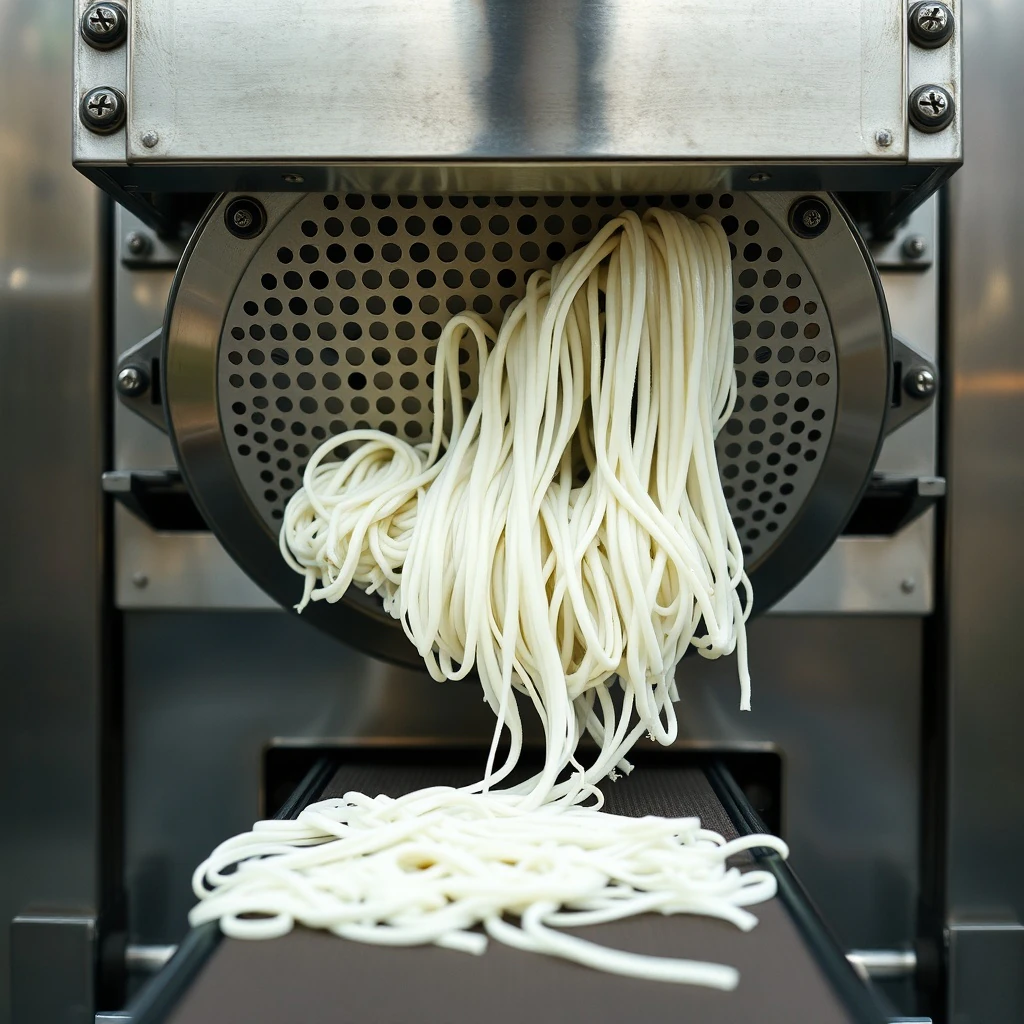
Palm-based soap noodles are dried, uncoloured soap pellets—the industrial intermediate between refined oils and finished bar soaps. The process begins with crude palm oil (CPO) or palm kernel oil (PKO). PKO is favoured for its high lauric acid content, which produces a hard, fast-lathering bar. CPO provides stearic and oleic acids that contribute to bar structure and mildness.
Both oils undergo physical refining: degumming, bleaching and deodorisation (RBD). The resulting RBD oil is then sent to a saponification reactor. Here, the oil is mixed with a concentrated sodium hydroxide (caustic soda) solution under controlled temperature. The reaction yields neat soap – a semi-solid mass of sodium salts of fatty acids – and crude glycerin as a by-product.
The neat soap is washed with brine to remove residual caustic and impurities, then passed through a centrifuge to separate the soap from the glycerin-rich aqueous phase. The washed soap is dried in a flash-dryer or vacuum dryer to a moisture content of 10–15%. The dried soap is extruded through a perforated plate, forming cylindrical pellets (“noodles”) typically 2–4 mm in diameter and 5–15 mm long.
Soap noodles offer buyers a consistent, transportable feedstock. Volatile fatty acid prices make noodle contracts a hedge against feedstock cost swings. The glycerin recovered during saponification is itself a valuable co-product, improving the economics of the entire process. For procurement managers, understanding the noodle’s fatty acid composition—especially the C12/C14 ratio from PKO—directly affects lathering properties in the final bar.
Key quality parameters include: total fatty matter (TFM) ≥ 78%, free caustic ≤ 0.1%, moisture ≤ 15%, and an unsaponifiable content below 1%. Colour should be uniform (white or off-white for most applications). Trace metals such as iron and nickel must be low to avoid rancidity. Buyers should verify that suppliers operate RSPO-certified supply chains if sustainability claims are required. Consistency in noodle size and bulk density affects blending and processing at the finishing mill.
Palm-based soap noodles represent a mature, capital-efficient link between oil refining and consumer soap production. For industrial buyers, a firm grasp of the process—from saponification through drying and extrusion—enables better specification writing, quality control and cost analysis.
A neutral explainer on how crude palm oil is split into liquid olein and solid stearin, and what that means for procurement decisions.

Fractionation is the process that separates crude palm oil (CPO) into two distinct products: palm olein and palm stearin. Understanding this separation is essential for buyers because each fraction has different physical properties and applications.
Fractionation is a controlled crystallisation and filtration process. The CPO is cooled to a specific temperature, causing the higher-melting-point triglycerides to crystallise. These crystals are then mechanically separated from the liquid fraction. The liquid portion is palm olein; the solid portion is palm stearin. The process does not use chemicals—only temperature control and physical separation.
The exact properties depend on the fractionation conditions and the quality of the crude oil. Buyers often request specific iodine value ranges or slip melting points to match their application.
Procurement managers select olein or stearin based on the end product’s required texture, stability, and processing behaviour.
A buyer who orders the wrong fraction may encounter issues: olein that clouds in cooler storage, or stearin that is too hard for a baking application. Understanding the fractionation process helps avoid costly specification mismatches.
Fractionation is a core technology that turns a single commodity into tailored ingredients. For first-time buyers, working with a knowledgeable supplier and understanding the two basic fractions is the first step toward effective palm oil procurement.
Our market desk connects serious buyers with vetted origin suppliers across Southeast Asia. Indicative pricing, specifications and shipment guidance — free of charge.
Get connected →Regulatory shifts in Indonesia and India create new dynamics for palm oil buyers and suppliers.
Full story — Page 2 ▸A technical explainer for buyers: saponification, refining, noodling and commercial factors that shape the soap noodle market.
Full story — Page 2 ▸A neutral explainer on how crude palm oil is split into liquid olein and solid stearin, and what that means for procurement decisions.
Full story — Page 2 ▸Market eyes Malaysia's tight supply, Indonesia's biodiesel mandate, and India's festival-driven import surge.
Palm oil futures are trading near three-month highs this week, supported by a confluence of supply-side constraints and policy-driven demand. Malaysian benchmark contracts closed higher on supply squeeze concerns, while the broader vegetable oil complex firmed on stronger crude oil and rival edible oil prices.
Malaysian palm oil production remains under pressure from persistent labour shortages and ageing trees. The Malaysian Palm Oil Council has flagged that crude palm oil prices are likely to stay within a RM4,400–RM4,650 per tonne range for August, reflecting a market that is balanced but vulnerable to weather disruptions. High CPO prices are expected to extend, according to industry analysts, as inventories remain relatively lean heading into the second half of the year.
Indonesia’s formal launch of the B50 biodiesel programme has added a structural demand layer to the market. The mandate, which requires 50% palm oil-based biodiesel blending, is set to absorb additional domestic supply and tighten export availability. India’s central bank has explicitly linked the broad-based rise in edible oil prices to increased biofuel use, citing Indonesia’s move as a key factor.
India, the world’s largest vegetable oil importer, is poised to see a sharp uptick in edible oil imports between July and October as buyers stock up ahead of the festive season. This comes after a 29% year-on-year decline in imports in June. The surge is likely to support palm oil prices, though the country is also grappling with rising duty-free imports from Nepal, which have surged 548%, raising concerns among domestic processors.
Geopolitical risks continue to underscore India’s heavy reliance on imported edible oils, with supply chain disruptions remaining a latent threat. Meanwhile, palm oil’s correlation with crude oil remains intact; stronger crude prices improve the economics of palm-based biodiesel and provide a floor under the vegetable oil complex.
For the coming weeks, the market is likely to remain rangebound but with an upward bias. The convergence of Malaysia’s supply squeeze, Indonesia’s B50 implementation, and India’s pre-festival restocking creates a supportive backdrop. However, any signs of slower-than-expected biodiesel uptake or a rebound in Malaysian production could trigger a correction.
Takeaway for buyers: Track real-time flows under Indonesia’s B50 mandate and Malaysia’s monthly production data—these two variables will determine whether the current price plateau holds or breaks higher.
CPO futures steady on biodiesel demand prospects and supply squeeze concerns, with the market eyeing India’s import surge ahead of festivals.
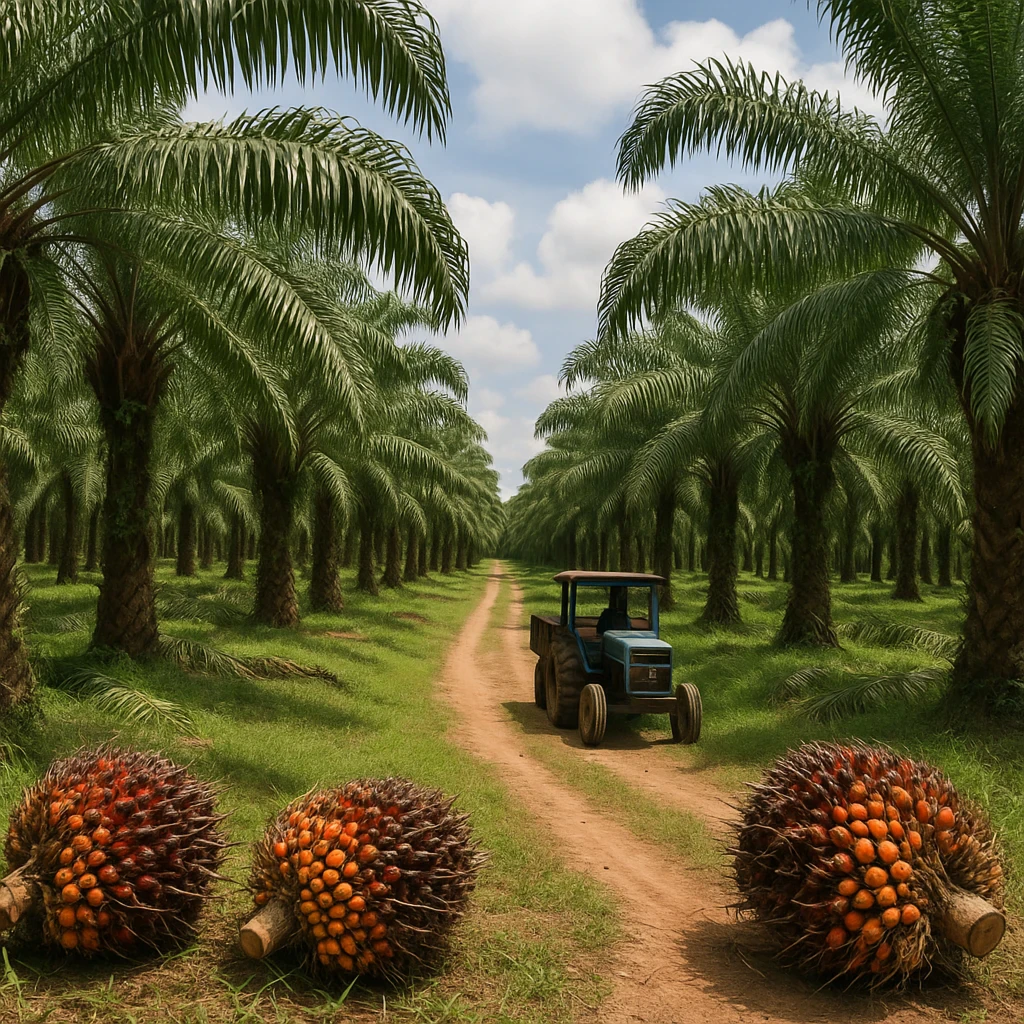
Crude palm oil (CPO) futures held near a three-month high on Thursday, supported by a confluence of supply risks and robust biodiesel demand signals. The benchmark contract on Bursa Malaysia Derivatives remained elevated after climbing in the previous session, as traders weighed Indonesia’s B50 biodiesel rollout against tightening supply expectations.
Indonesia’s B50 biodiesel mandate, launched earlier this month, continues to underpin the market. The policy is expected to absorb additional palm oil volumes, tightening global availability. The Reserve Bank of India flagged biofuel production as a key driver of elevated edible oil prices, citing Indonesia’s mandate in a recent report. The RBI’s commentary reinforces the structural demand shift from energy policy, which analysts say could keep prices elevated even as other vegetable oils ease.
Malaysian palm oil futures have rallied on concerns over a supply squeeze, with production in the world’s second-largest producer facing seasonal headwinds. The Malaysian Palm Oil Council projected CPO prices to stay in a RM4,400–RM4,650 per tonne range for August, reflecting a market caught between tight supply and cautious demand. Meanwhile, rival edible oils and crude oil have firmed, providing additional support to palm oil. The Middle East conflict continues to inject volatility into crude markets, strengthening the correlation between vegetable oil and energy prices.
India, the world’s largest vegetable oil importer, is expected to see edible oil imports surge from July through October as buyers stock up ahead of the festival season. This seasonal demand spike comes at a time when global supplies are already stretched. However, concerns over duty-free imports from Nepal are creating friction for domestic Indian producers. Experts have urged India to make import duties more flexible to balance the needs of consumers and crushers. The country’s heavy reliance on imports, highlighted by recent geopolitical risks, remains a key vulnerability for the market.
Despite the futures rally, physical market demand remains constrained. Buyers on the spot market are showing limited appetite at current elevated levels, with end-users preferring to draw down inventories rather than chase prices. This divergence between paper and physical markets suggests that the upside may be capped unless fresh supply disruptions emerge.
Buyers should monitor Indonesia’s B50 implementation pace and any further supply-side shocks from weather or geopolitical events. India’s import pace ahead of Diwali will be a key demand indicator, while any shift in crude oil prices could quickly spill over into vegetable oil markets.
Sources: Deccan Chronicle; Business Recorder; livemint.com; Business Recorder; finance.biggo.com; The Economic Times
Biodiesel demand prospects and supply concerns push palm oil to three-month high.
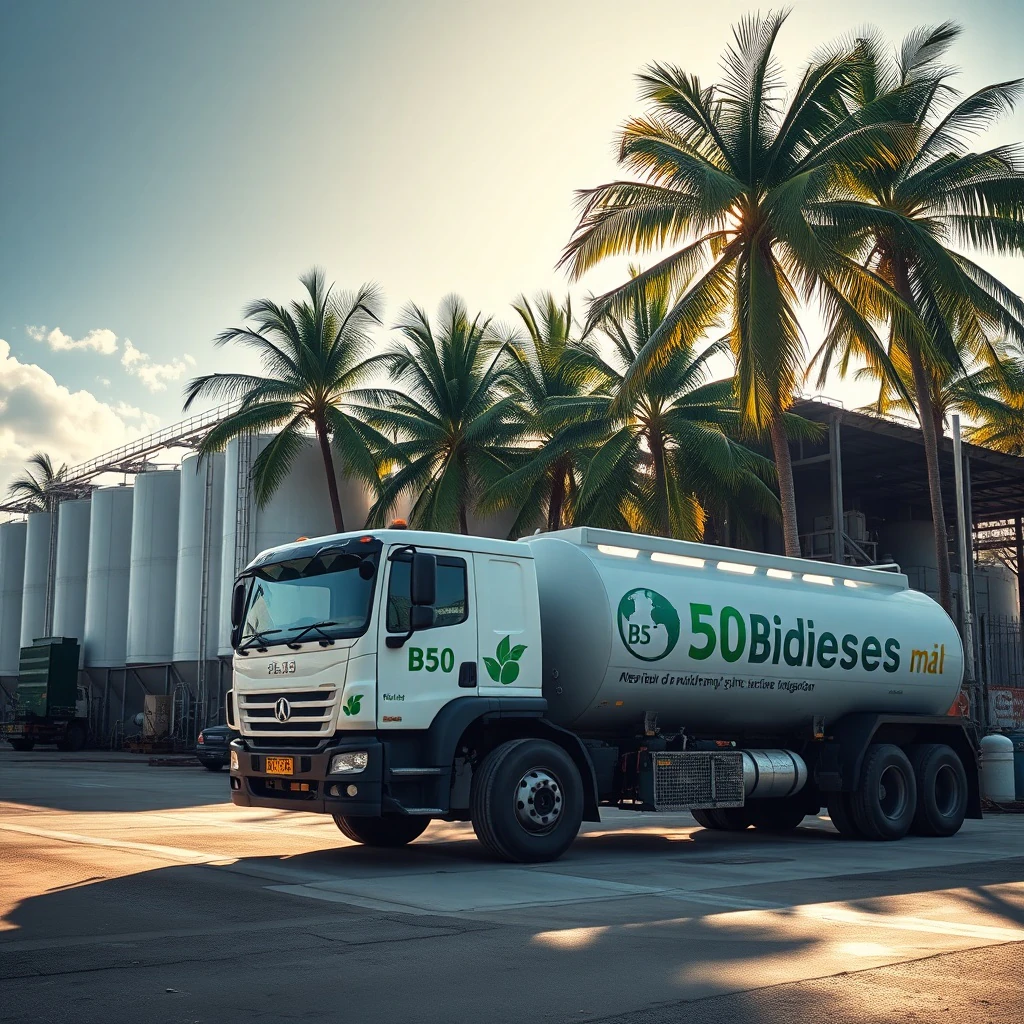
Palm oil futures climbed to a three-month high this week, driven by mounting supply risks and renewed biodiesel demand prospects following Indonesia’s rollout of its B50 biodiesel programme.
The mandatory B50 blend—requiring 50% palm oil-based biodiesel in diesel fuel—was officially launched in mid-July, with implementation details still being phased in. Analysts expect the mandate to absorb an additional 2-3 million tonnes of crude palm oil annually, tightening global availability at a time when production growth in key regions remains subdued.
India’s central bank, the Reserve Bank of India, has linked the broad-based rise in edible oil prices to expanding biofuel mandates, specifically citing Indonesia’s B50 policy. In its latest monetary policy report, the RBI noted that diversion of vegetable oils for fuel production is exerting upward pressure on cooking oil prices across Asia, raising food inflation concerns.
This marks a rare direct acknowledgment by a major central bank of the structural demand shift biofuels are creating in edible oil markets. Compliance-minded buyers, particularly in price-sensitive importing nations, are now reassessing their procurement strategies amid expectations of sustained higher prices.
Beyond policy-driven demand, physical supply constraints are adding to the bullish narrative. Seasonal production patterns in Malaysia and Indonesia have been uneven, while labour shortages and ageing trees continue to cap output growth. The combination of tighter supply and policy-induced demand has pushed benchmark palm oil contracts to levels not seen since April.
For palm oil importers and downstream users, the B50 mandate signals a structural shift in the market’s demand base. Buyers focused on sustainability compliance face the dual challenge of securing certified sustainable palm oil volumes in a tightening market while managing cost exposure.
Regulatory attention is also growing. India’s scrutiny of duty-free edible oil imports from Nepal—which some producers say are being used to circumvent tariffs—highlights the complex trade flows emerging as palm oil prices rise. Meanwhile, Indonesia’s policy could prompt other biodiesel adopters to review their blending targets, potentially amplifying demand further.
Market participants will closely watch Indonesia’s B50 implementation pace and any adjustments to export levies that might accompany the programme. For now, the policy-driven demand shock is the dominant force shaping palm oil’s near-term trajectory.
Sources: Business Recorder; livemint.com; Oils & Fats International; The Jakarta Post; Reuters
A step-by-step look at the critical first day of an oil palm fruit bunch, from field to mill.
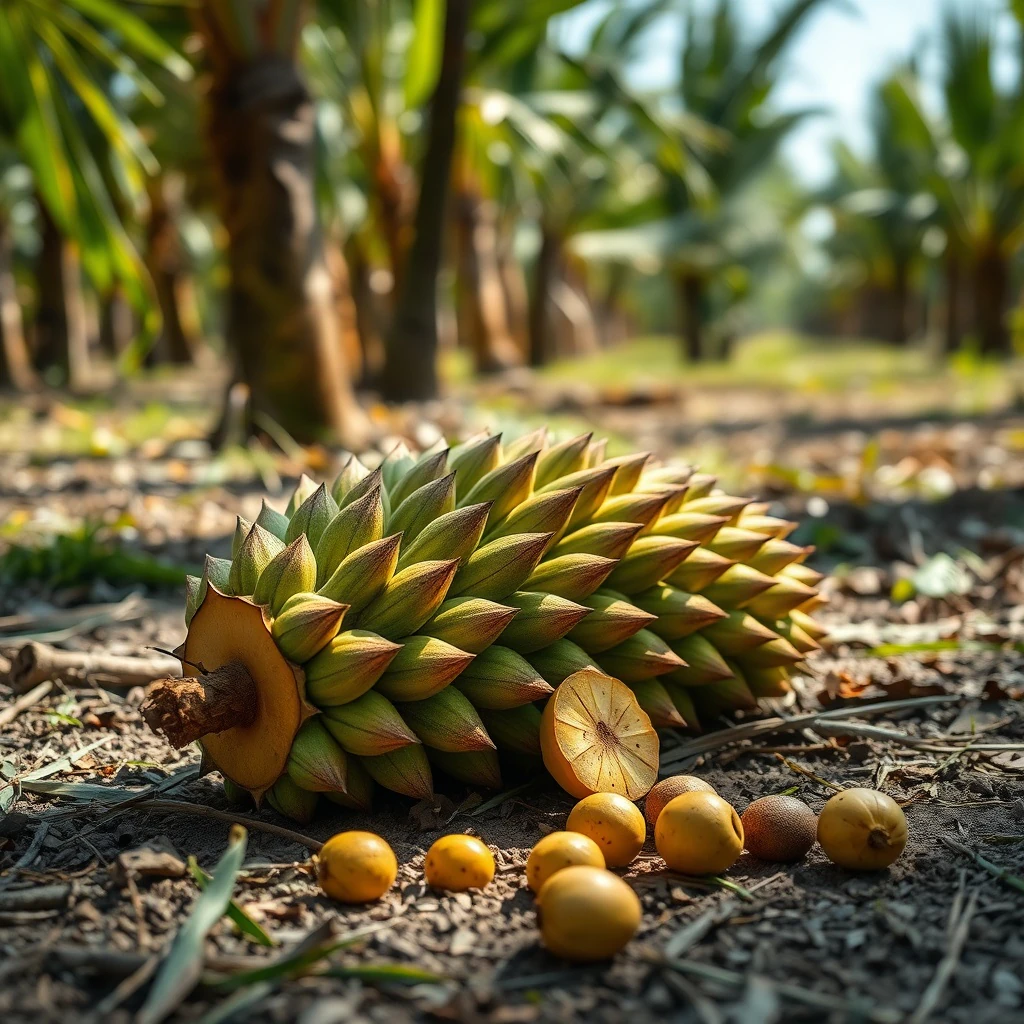
For procurement managers and first-time buyers, understanding the immediate post-harvest handling of the oil palm fruit is essential. The quality of crude palm oil (CPO) is largely determined in the first 24 hours after the fresh fruit bunches (FFB) are cut.
Harvesting begins when the fruit bunches are ripe, indicated by a few loose fruits on the ground. Workers cut the bunch using a long-handled chisel or sickle. The bunch is then placed on the ground, and loose fruits are gathered. This is a manual process, even on large plantations.
Time is the enemy of oil quality. The cut bunch continues to respire, generating heat. If left too long, the natural oil begins to break down, raising free fatty acid (FFA) levels. A high FFA content reduces oil quality and yield. Therefore, FFB are typically transported to the mill within 24 hours of harvest, often much sooner. Trucks or small tractors move the bunches from the field to a central collection point, then to the mill.
At the mill, the FFB are first weighed and inspected. They are then loaded into large horizontal cages called sterilizers. Sterilization is a high-pressure steaming process that lasts about 90 minutes. This stops the enzymatic breakdown of oil, softens the fruit, and loosens the fruitlets from the bunch. It is the most critical step in preserving oil quality.
After sterilization, the bunches are fed into a rotary drum thresher, which separates the fruitlets from the empty bunch stalks. The stalks are often used as fuel. The fruitlets then go to a digester, a heated tank with rotating arms that mash the fruit into a homogeneous oily mash.
The mash is then pressed in a screw press, squeezing out a mixture of crude oil, water, and solids. This mixture is sent to a clarification station, where it is heated and settled. Oil rises to the top, while water and solids settle. The crude oil is then centrifuged, dried, and stored in tanks for refining or export. The entire process, from harvest to crude oil storage, is designed to be completed within this tight 24-hour window to maximize yield and quality.
For buyers, the key takeaway is that the freshness of FFB directly impacts the FFA content of the CPO. Mills that enforce strict 24-hour delivery windows consistently produce lower-FFA oil, which is more valuable for refining into cooking oil, margarine, and industrial fats. A mill's ability to manage this logistics chain is a strong indicator of its operational discipline.
Our market desk connects serious buyers with vetted origin suppliers across Southeast Asia. Indicative pricing, specifications and shipment guidance — free of charge.
Get connected →Biodiesel demand prospects and supply concerns push palm oil to three-month high.
Full story — Page 2 ▸A step-by-step look at the critical first day of an oil palm fruit bunch, from field to mill.
Full story — Page 2 ▸CPO futures steady on biodiesel demand prospects and supply squeeze concerns, with the market eyeing India’s import surge ahead of festivals.
Crude palm oil (CPO) futures held near a three-month high on Thursday, supported by a confluence of supply risks and robust biodiesel demand signals. The benchmark contract on Bursa Malaysia Derivatives remained elevated after climbing in the previous session, as traders weighed Indonesia’s B50 biodiesel rollout against tightening supply expectations.
Indonesia’s B50 biodiesel mandate, launched earlier this month, continues to underpin the market. The policy is expected to absorb additional palm oil volumes, tightening global availability. The Reserve Bank of India flagged biofuel production as a key driver of elevated edible oil prices, citing Indonesia’s mandate in a recent report. The RBI’s commentary reinforces the structural demand shift from energy policy, which analysts say could keep prices elevated even as other vegetable oils ease.
Malaysian palm oil futures have rallied on concerns over a supply squeeze, with production in the world’s second-largest producer facing seasonal headwinds. The Malaysian Palm Oil Council projected CPO prices to stay in a RM4,400–RM4,650 per tonne range for August, reflecting a market caught between tight supply and cautious demand. Meanwhile, rival edible oils and crude oil have firmed, providing additional support to palm oil. The Middle East conflict continues to inject volatility into crude markets, strengthening the correlation between vegetable oil and energy prices.
India, the world’s largest vegetable oil importer, is expected to see edible oil imports surge from July through October as buyers stock up ahead of the festival season. This seasonal demand spike comes at a time when global supplies are already stretched. However, concerns over duty-free imports from Nepal are creating friction for domestic Indian producers. Experts have urged India to make import duties more flexible to balance the needs of consumers and crushers. The country’s heavy reliance on imports, highlighted by recent geopolitical risks, remains a key vulnerability for the market.
Despite the futures rally, physical market demand remains constrained. Buyers on the spot market are showing limited appetite at current elevated levels, with end-users preferring to draw down inventories rather than chase prices. This divergence between paper and physical markets suggests that the upside may be capped unless fresh supply disruptions emerge.
Buyers should monitor Indonesia’s B50 implementation pace and any further supply-side shocks from weather or geopolitical events. India’s import pace ahead of Diwali will be a key demand indicator, while any shift in crude oil prices could quickly spill over into vegetable oil markets.
CPO futures edge higher on supply concerns, but range-bound outlook persists amid weak buying interest.
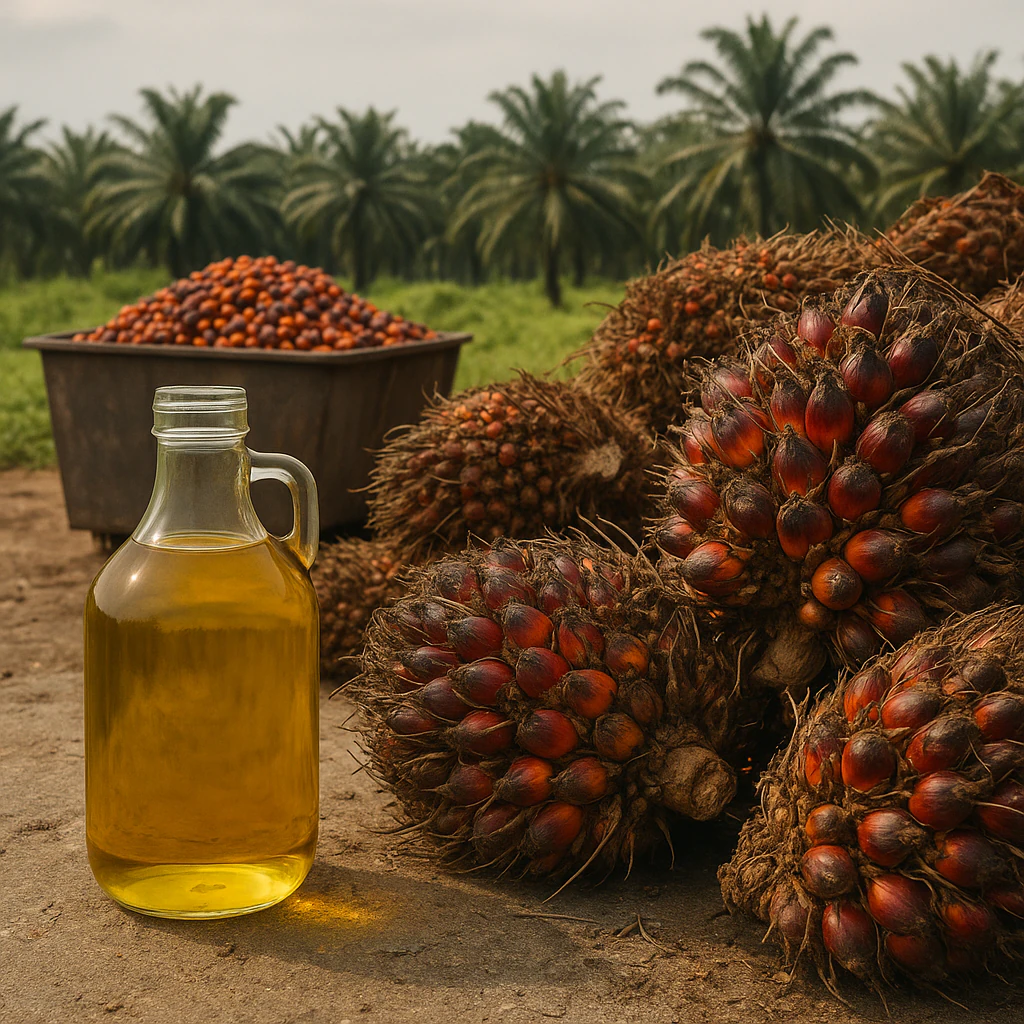
Malaysian palm oil futures closed higher on Thursday, supported by ongoing supply squeeze fears, according to market reports. The benchmark contract edged up as traders weighed tightening near-term availability against lackluster physical demand.
Sources: Business Recorder; finance.biggo.com; The Star; Barchart.com; UkrAgroConsult; UkrAgroConsult
Jakarta's B50 rollout lifts domestic palm oil use, while Nepal duty-free imports pressure Indian producers.
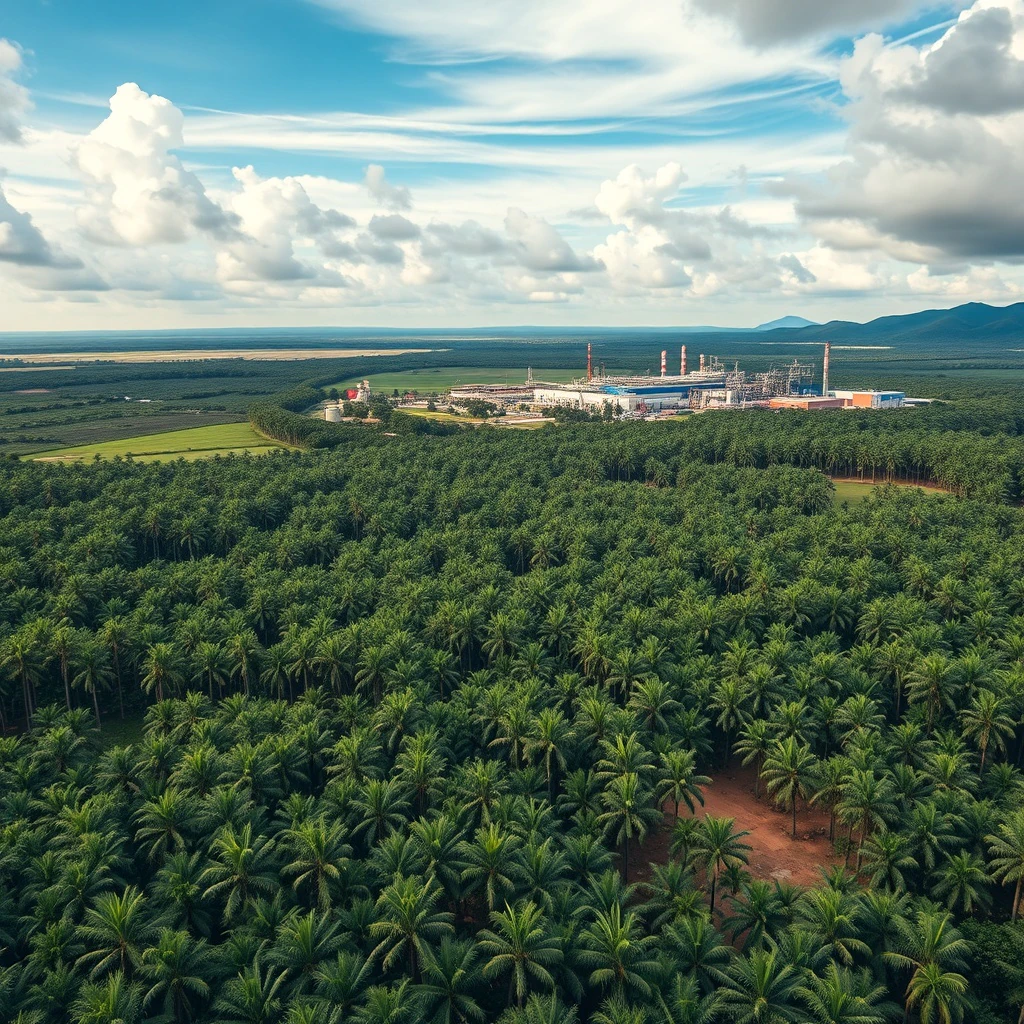
Indonesia has officially launched its B50 biodiesel programme, requiring a 50% palm oil-based blend in diesel fuel. The mandate, confirmed by multiple industry sources in mid-July, is expected to significantly increase domestic palm oil consumption, potentially diverting supply away from export markets.
Industry analysts note that the B50 policy could absorb an additional 5-7 million tonnes of palm oil annually, tightening global availability. This comes at a time when El Niño-related weather concerns are already pressuring production forecasts for 2026/27.
The B50 mandate has opened growth opportunities for Malaysian palm oil exporters, as Indonesian supply becomes more focused on domestic biodiesel demand. Malaysian producers are expected to fill some of the gap in international markets, particularly for buyers seeking alternative origins.
However, the overall supply squeeze is likely to keep prices elevated, with palm oil futures already reacting to the combined effect of biodiesel demand and weather risks.
Separately, duty-free edible oil imports from Nepal are becoming a growing concern for Indian producers. The arrangement, intended to support Nepal's economy, has led to a surge in refined palm oil and other vegetable oil shipments into India, undercutting domestic processors.
Indian refiners are calling for a review of the preferential trade terms, arguing that the imports distort local markets and hurt farmer incomes. The issue adds another layer of complexity for compliance-minded buyers navigating regional trade policies.
For palm oil buyers, the combination of Indonesia's B50 mandate and potential supply disruptions from El Niño means securing long-term contracts at stable prices will be increasingly challenging. Compliance with sustainability requirements also becomes harder as demand for certified sustainable palm oil rises alongside overall consumption.
Traders recommend that buyers diversify sourcing, monitor Indonesian policy implementation closely, and factor in potential export restrictions if domestic biodiesel demand strains supply.
The policy landscape remains fluid, with further adjustments possible as Indonesia and India respond to market dynamics.
Sources: livemint.com; Oils & Fats International; The Star; The Jakarta Post; ChemAnalyst
A practical breakdown of the geolocation and supply-chain data that EUDR compliance demands from palm-oil producers and traders.

The European Union Deforestation Regulation (EUDR) requires that any palm oil, palm kernel oil, or derivative placed on the EU market be deforestation-free. To demonstrate this, suppliers must provide a specific set of geolocation and traceability data for every plot of land where the oil palm fruit was grown.
For every production plot, the supplier must submit the geolocation polygon – a set of latitude/longitude coordinates that trace the boundary of the farm or plantation. If the plot is smaller than four hectares, a single point coordinate (latitude and longitude with a minimum of six decimal places) is acceptable. These coordinates must be precise enough to identify the exact land parcel.
For smallholders, who often lack GPS equipment, the regulation allows the use of public satellite imagery or government land-registry data to define the plot boundaries, provided the data is verifiable.
Beyond geolocation, the EUDR requires a chain-of-custody document that links each batch of palm product back to the specific plots where the fruit was harvested. This means suppliers must record:
Each link in the chain must be documented with a unique identifier (such as a lot number or barcode) so that an auditor can trace a shipment back to the origin plot.
The importer or operator placing the product on the EU market must submit a due diligence statement to the EU member state’s competent authority. This statement includes the geolocation data and a declaration that the product complies with the deforestation-free requirement. The statement must be supported by the underlying traceability records.
For procurement managers, this means that any palm product sourced from or destined for the EU must come with a traceability dossier. When evaluating new suppliers, buyers should request:
Suppliers who cannot provide this data may be unable to ship to the EU market after the regulation’s enforcement date. Buyers should also note that the data must be kept for at least five years and be available for inspection by EU authorities.
Most large palm-oil groups already use geographic information systems (GIS) and enterprise resource planning (ERP) software to manage this data. For smaller suppliers, third-party platforms that aggregate smallholder polygons and link them to mill receipts are becoming common. The key is that the data must be machine-readable (e.g., CSV, GeoJSON) and verifiable – not just a paper certificate.
In summary, EUDR compliance hinges on providing precise geolocation coordinates for every production plot and a complete, auditable chain-of-custody from farm to EU border. Buyers should treat this data as a standard part of their procurement documentation.
Our market desk connects serious buyers with vetted origin suppliers across Southeast Asia. Indicative pricing, specifications and shipment guidance — free of charge.
Get connected →Jakarta's B50 rollout lifts domestic palm oil use, while Nepal duty-free imports pressure Indian producers.
Full story — Page 2 ▸A practical breakdown of the geolocation and supply-chain data that EUDR compliance demands from palm-oil producers and traders.
Full story — Page 2 ▸CPO futures edge higher on supply concerns, but range-bound outlook persists amid weak buying interest.
Malaysian palm oil futures closed higher on Thursday, supported by ongoing supply squeeze fears, according to market reports. The benchmark contract edged up as traders weighed tightening near-term availability against lackluster physical demand.
Malaysian CPO benchmark holds above RM4,400 despite bearish production data and weak rival oils
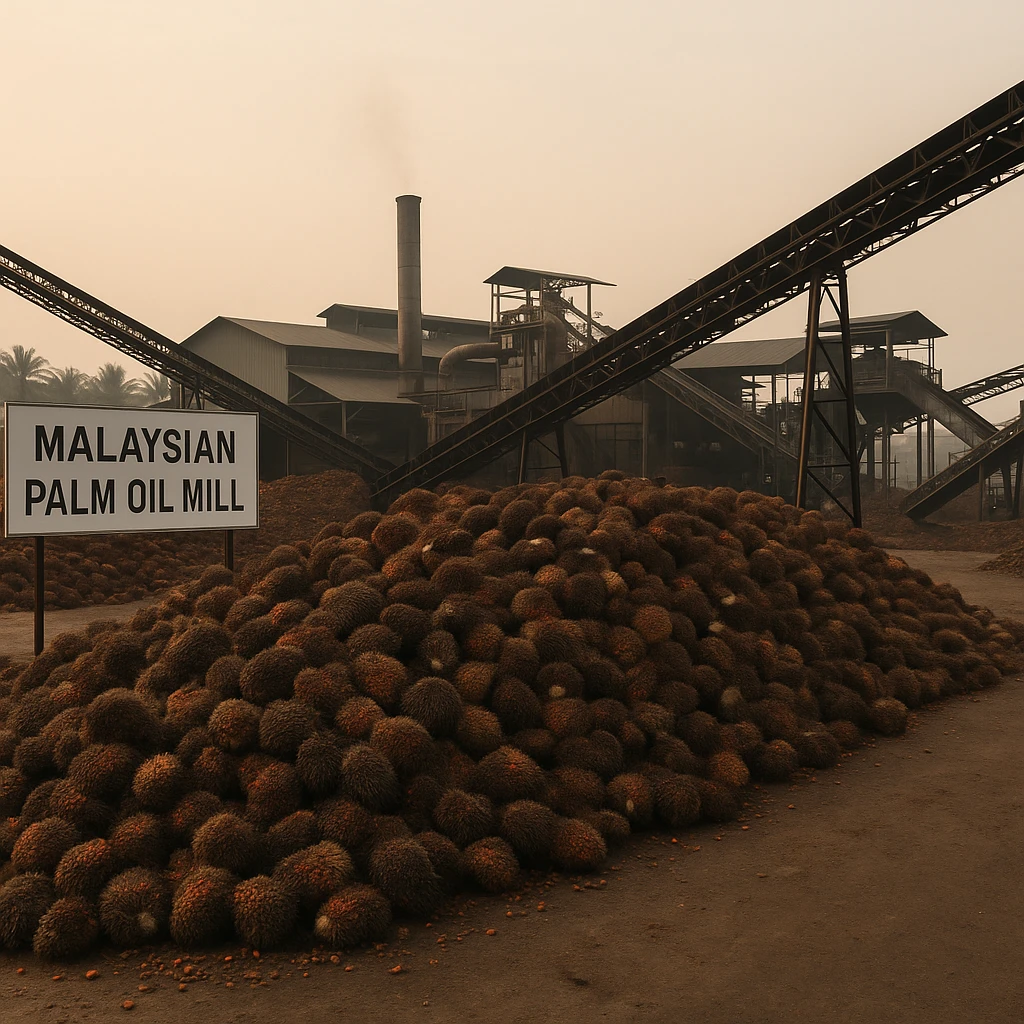
Malaysian crude palm oil futures closed little changed Tuesday, with the benchmark contract at approximately $1,099 per tonne (RM4,497), down 0.1% from the prior session. The global World Bank benchmark stood at $1,105, while Indonesia’s reference price was set at $1,030 per tonne.
Malaysia’s June production rose 8.1% month-on-month to 1,638,777 tonnes, pushing closing stocks to 1,332,697 tonnes, a 3.7% increase from May, according to MPOB data. Exports climbed 6.2% to 1,204,013 tonnes, while imports surged 135.3% to 103,113 tonnes, partly reflecting arbitrage flows from Indonesia. The fresh fruit bunch reference price slipped 1.3% to RM48.90.
El Niño conditions persist with an ONI of +1.0, though rainfall across producing belts remains broadly normal, limiting immediate yield stress. Brent crude edged up 0.4% to $92 per barrel, lending support to biodiesel blending economics. Indonesia’s B50 biodiesel mandate continues to underpin longer-term demand expectations, with officials stating the programme will boost palm oil use and cut fuel imports.
Palm oil slipped again Tuesday as rival edible oils weakened, with soybean oil under pressure from expanding US domestic crushing capacity and a large Brazilian harvest. China’s vegetable oil outlook remained unchanged, while India—the world’s largest vegetable oil importer—saw a 30% drop in June edible oil imports amid lower palm and soybean purchases. Experts have urged New Delhi to make import duties more flexible to manage price volatility.
Thailand has tightened palm oil export controls, reshaping regional supply flows, while Indonesia’s weak rupiah (17,938 per dollar) is encouraging higher export volumes. The ringgit held at 4.09 per dollar, offering some cost relief for Malaysian exporters.
Our model outlook points to a bearish bias over the next seven trading days, pressured by negative seasonality, broad July weakness, and rising Indonesian shipments. Rally potential remains capped by ample supply, though support from crude oil and biodiesel mandates limits downside. The Malaysian Palm Oil Council sees CPO prices trading between RM4,400 and RM4,650 in August.
Buyers should monitor Indonesia’s export pace amid the weak rupiah and any further clarity on India’s import duty structure, as these factors will shape near-term price direction.
Sources: BusinessToday Malaysia; The Edge Malaysia; KLSE Screener; marketscreener.com; Finimize; MSN
New policy supports CPO floor, but ample supply and weak rupiah cap rally potential
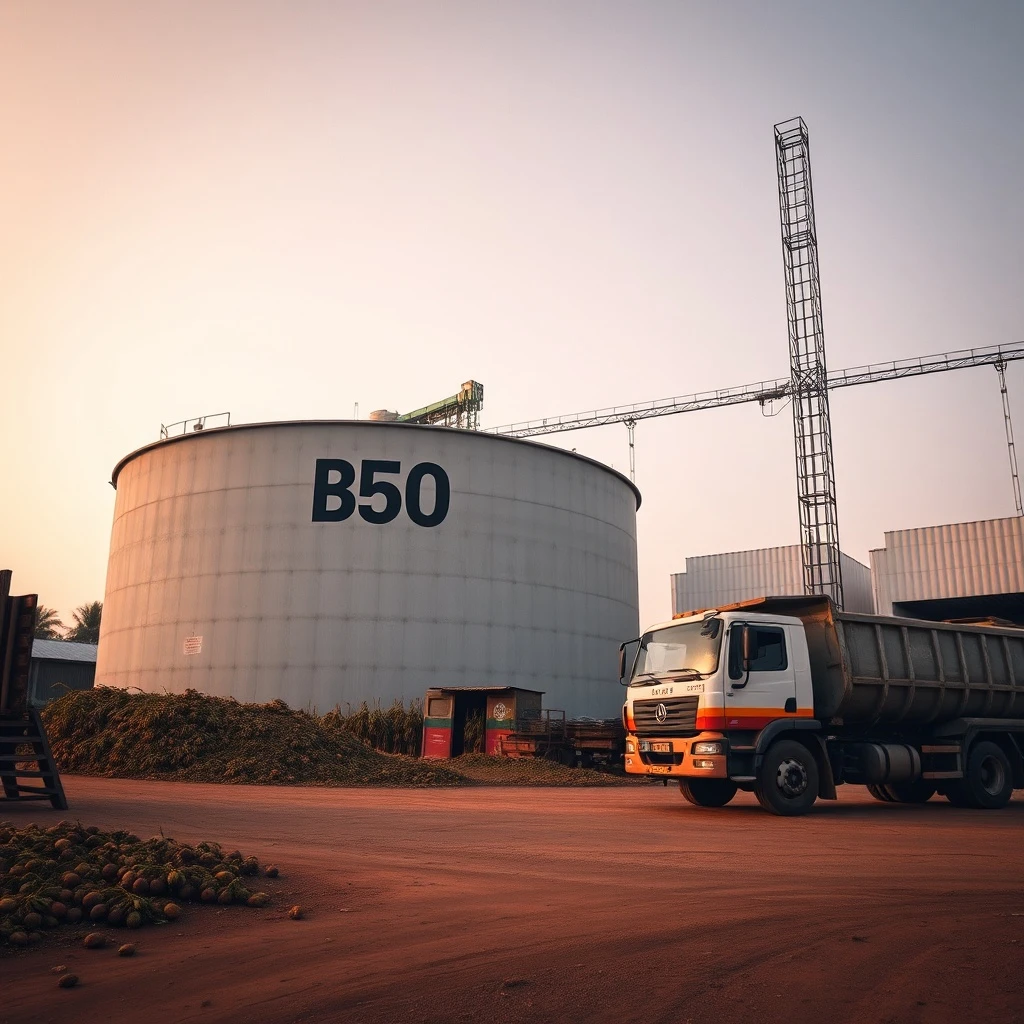
Indonesia officially launched its B50 biodiesel mandate on July 14, 2026, requiring a 50% palm oil-based biodiesel blend in diesel fuel. The policy is expected to significantly increase domestic palm oil consumption, supporting CPO prices and reducing the country's fuel import bill. The Indonesian government estimates the mandate will absorb several million tonnes of crude palm oil annually, tightening the global supply-demand balance.
The B50 mandate provides a structural demand boost for palm oil, particularly from the world's largest producer. This development supports CPO prices by diverting more supply to the domestic biodiesel sector, limiting export availability. However, the impact is partially offset by Malaysia's rising production and stocks, as MPOB data showed June CPO output up 8.1% month-on-month to 1.64 million tonnes, with inventories climbing 3.7% to 1.33 million tonnes. The weak Indonesian rupiah (around 17,938 per dollar) also encourages exports from Indonesia, adding to global supply.
For compliance-minded buyers, the B50 mandate reinforces palm oil's role in the energy transition, potentially increasing demand for certified sustainable palm oil (CSPO) as biodiesel feedstocks. However, the policy does not directly address deforestation concerns, which remain a key issue for European buyers. The European Commission's recent decision to exclude leather from its landmark deforestation law highlights ongoing regulatory fragmentation, but palm oil remains under scrutiny. Buyers should monitor Indonesia's implementation of the B50 programme and its impact on export volumes, as well as potential knock-on effects on CPO price volatility.
Our model outlook sees CPO as bearish over the next seven trading days, pressured by negative seasonality and rising Indonesian exports. However, the B50 mandate provides a price floor, while Brent crude's rally above $92 per barrel improves biodiesel blend economics. The interplay between ample supply and policy-driven demand will keep prices range-bound in the near term.
Sources: MSN; Oils & Fats International; The Star; The Jakarta Post
A technical walkthrough of physical refining—how crude palm oil becomes neutral, stable and market-ready.

Crude palm oil (CPO) as it leaves the mill is a complex mixture of triglycerides, free fatty acids, pigments, gums, trace metals and volatile odour compounds. To become the bland, golden oil demanded by food manufacturers and industrial buyers, it must undergo physical refining—a three-stage process of degumming, bleaching and deodorising. Each step has a distinct chemical purpose and commercial consequence.
Degumming removes phospholipids (gums) that would otherwise darken the oil, promote foaming and shorten shelf life. In physical refining, CPO is first treated with phosphoric or citric acid at about 80–90°C. The acid chelates non-hydratable gums—calcium and magnesium salts of phosphatidic acid—converting them into hydratable forms. A small amount of water is then added, and the hydrated gums are separated by centrifugation.
Why it matters commercially: Incomplete degumming leaves residual phosphorus above 3–5 ppm, which fouls downstream bleaching earth and shortens its life. For buyers, a refinery’s ability to hit low phosphorus specs (typically <3 ppm) directly affects bleaching cost and final oil quality.
Bleaching is not just about colour. The oil is heated to 100–110°C under vacuum and mixed with acid-activated bleaching earth (typically 0.5–2% by weight). The earth’s high surface area adsorbs carotenoids (giving palm oil its red-orange hue), residual soaps, oxidation products and pro-oxidant metals like iron and copper. After 20–30 minutes of contact, the earth is removed by filtration.
What to look for when sourcing: A good bleached oil has a Lovibond red colour of 2–3 units (5¼ inch cell) and an iron content below 0.5 ppm. Over-bleaching—using too much earth or excessive temperature—can strip tocopherols (natural antioxidants) and increase oil loss. Buyers should ask for typical bleaching earth dosage and neutral oil loss figures.
Deodorising is a high-temperature steam distillation carried out at 240–260°C under near-vacuum (2–6 mbar). Steam is sparged through the oil, carrying away free fatty acids (FFA), aldehydes, ketones and other volatile compounds responsible for off-flavours and odours. The stripped FFA are condensed and collected as palm fatty acid distillate (PFAD), a valuable co-product used in soap and animal feed.
Why it matters commercially: The deodoriser is the most energy-intensive step, consuming about 30–50 kg of steam per tonne of oil. Final refined, bleached and deodorised (RBD) palm oil typically has an FFA content below 0.1% and a neutral taste. For buyers, the FFA level is a key specification: higher FFA indicates incomplete stripping or poor feedstock quality.
In a modern refinery, these three steps are continuous and tightly controlled. Key parameters—temperature, vacuum, residence time, earth dosage and steam flow—are monitored by distributed control systems. Buyers should look for refineries that provide batch certificates showing phosphorus, iron, colour, FFA and moisture content. Consistency across deliveries matters more than any single number.
Understanding these steps helps procurement managers evaluate supplier capability, negotiate specifications and anticipate how process variations affect final product performance in frying, baking or confectionery applications.
A practical guide to the refining process that turns crude palm oil into RBD products for global trade.
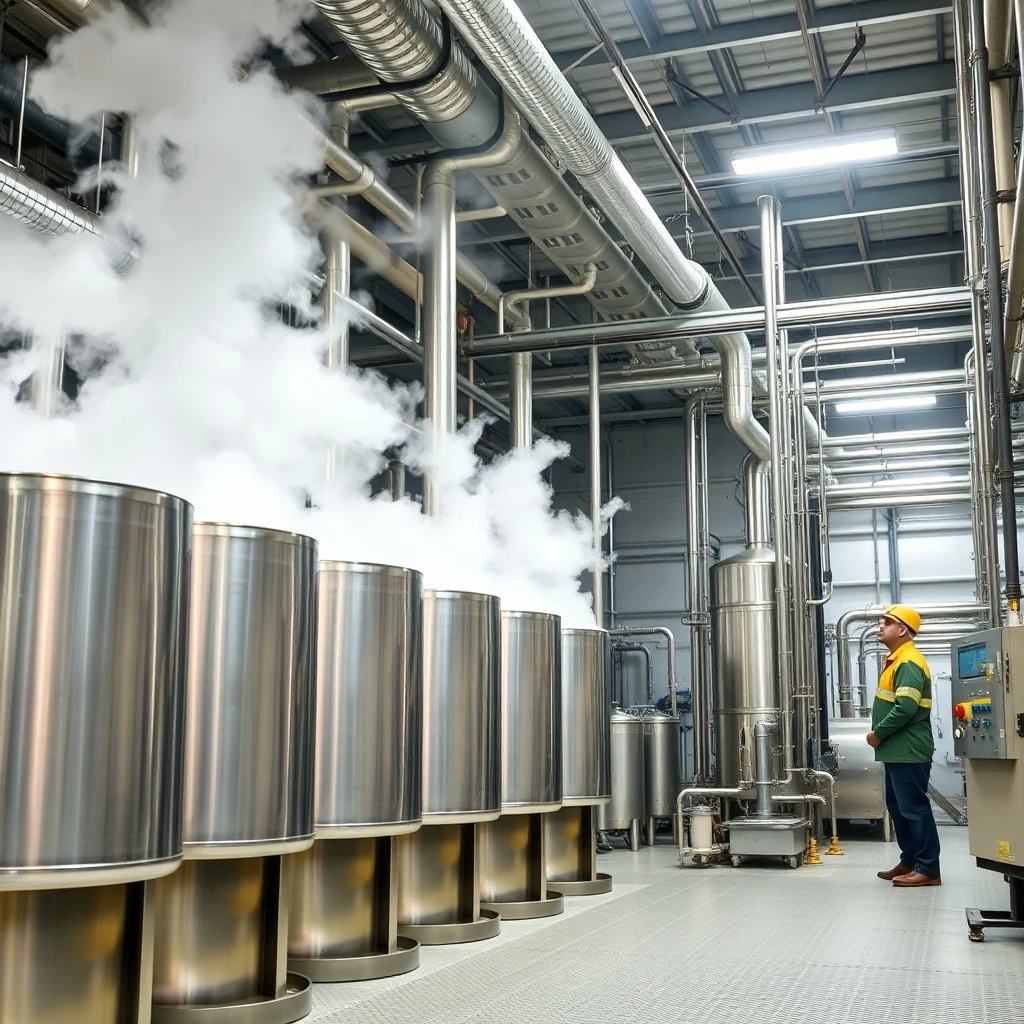
RBD stands for Refined, Bleached, and Deodorised. It describes the standard industrial process that transforms crude palm oil (CPO) into a neutral, stable, and versatile commodity. For procurement managers and first-time buyers, understanding this sequence is essential for specifying product quality and negotiating contracts.
Crude palm oil, as it comes from the mill, contains free fatty acids (FFAs), pigments, odours, and minor impurities. RBD processing removes these to produce oil that is clear, bland, and shelf-stable. The three steps are always performed in order: refining, bleaching, deodorising.
The first stage reduces the FFA content from about 3-5% in crude oil to below 0.1%. There are two main methods:
The choice affects yield, cost, and the quality of by-products. Most bulk RBD palm oil is physically refined.
Bleaching does not use bleach. Instead, the oil is mixed with bleaching earth (activated clay) under vacuum and heated. The clay adsorbs colour pigments (carotenoids, chlorophyll), trace metals, and oxidation products.
After mixing, the slurry is filtered to remove the spent earth. The result is a pale yellow oil, free from most colour bodies and pro-oxidant metals. The efficiency of this step determines the final oil’s colour stability during storage and frying.
The final step is steam stripping under high temperature (about 240-260°C) and vacuum. Volatile compounds responsible for odour and taste are distilled off and collected. The oil becomes virtually odourless and flavourless.
Deodorising also completes the removal of any residual FFAs and destroys peroxides, ensuring oxidative stability. The oil is then cooled and stored under nitrogen to prevent reversion.
After these three steps, the oil is classified as RBD palm oil (from the mesocarp) or RBD palm olein/stearin (after fractionation). Key specifications buyers should check include:
RBD oil is the base for margarine, shortening, frying fats, and many food products. It is also used in non-food applications such as soap and biodiesel.
Understanding the RBD process helps buyers evaluate supplier quality, negotiate specifications, and avoid common pitfalls such as receiving under-refined oil that causes foaming or off-flavours. The process also determines the by-product credits (PFAD, spent earth) that can affect net pricing.
For first-time buyers, requesting a certificate of analysis (COA) covering FFA, colour, and moisture is standard practice. Reputable suppliers will provide these for each lot.
This space reaches palm oil buyers, traders and industry readers every day. Sponsorship and advertising enquiries are welcome — get in touch:
New policy supports CPO floor, but ample supply and weak rupiah cap rally potential
Full story — Page 2 ▸A technical walkthrough of physical refining—how crude palm oil becomes neutral, stable and market-ready.
Full story — Page 2 ▸A practical guide to the refining process that turns crude palm oil into RBD products for global trade.
Full story — Page 2 ▸Malaysian CPO benchmark holds above RM4,400 despite bearish production data and weak rival oils
Malaysian crude palm oil futures closed little changed Tuesday, with the benchmark contract at approximately $1,099 per tonne (RM4,497), down 0.1% from the prior session. The global World Bank benchmark stood at $1,105, while Indonesia’s reference price was set at $1,030 per tonne.
Malaysia’s June production rose 8.1% month-on-month to 1,638,777 tonnes, pushing closing stocks to 1,332,697 tonnes, a 3.7% increase from May, according to MPOB data. Exports climbed 6.2% to 1,204,013 tonnes, while imports surged 135.3% to 103,113 tonnes, partly reflecting arbitrage flows from Indonesia. The fresh fruit bunch reference price slipped 1.3% to RM48.90.
El Niño conditions persist with an ONI of +1.0, though rainfall across producing belts remains broadly normal, limiting immediate yield stress. Brent crude edged up 0.4% to $92 per barrel, lending support to biodiesel blending economics. Indonesia’s B50 biodiesel mandate continues to underpin longer-term demand expectations, with officials stating the programme will boost palm oil use and cut fuel imports.
Palm oil slipped again Tuesday as rival edible oils weakened, with soybean oil under pressure from expanding US domestic crushing capacity and a large Brazilian harvest. China’s vegetable oil outlook remained unchanged, while India—the world’s largest vegetable oil importer—saw a 30% drop in June edible oil imports amid lower palm and soybean purchases. Experts have urged New Delhi to make import duties more flexible to manage price volatility.
Thailand has tightened palm oil export controls, reshaping regional supply flows, while Indonesia’s weak rupiah (17,938 per dollar) is encouraging higher export volumes. The ringgit held at 4.09 per dollar, offering some cost relief for Malaysian exporters.
Our model outlook points to a bearish bias over the next seven trading days, pressured by negative seasonality, broad July weakness, and rising Indonesian shipments. Rally potential remains capped by ample supply, though support from crude oil and biodiesel mandates limits downside. The Malaysian Palm Oil Council sees CPO prices trading between RM4,400 and RM4,650 in August.
Buyers should monitor Indonesia’s export pace amid the weak rupiah and any further clarity on India’s import duty structure, as these factors will shape near-term price direction.
CPO futures slip on easing crude and competing oils, but Indonesia’s B50 mandate and firm exports underpin the market.

Malaysian crude palm oil futures edged lower on Tuesday, tracking declines in rival vegetable oils and crude petroleum. The pullback follows a recent rally that lifted prices to near one-month highs, driven by strength in Dalian oils and firmer crude values earlier in the week.
Indonesia’s launch of the B50 biodiesel mandate remains a dominant structural theme. The programme, rolled out in early July, is expected to absorb significantly more domestic crude palm oil, tightening export availability. Provincial initiatives such as Bengkulu’s planned biodiesel plant by 2027 signal long-term commitment, though industry participants note that current CPO supply can support the mandate this year, with higher output needed beyond.
On the demand side, India’s edible oil imports dropped 30% in June, with palm and soybean oil purchases both declining. The sharp fall highlights the price sensitivity of the world’s largest vegetable oil buyer, especially as geopolitical risks underscore India’s reliance on imports. Buyers are watching for any shift in Indian purchasing patterns as domestic stocks adjust.
Thailand’s tighter palm oil export controls are reshaping regional supply flows, potentially diverting more demand toward Malaysian and Indonesian origins. Meanwhile, China’s vegetable oil demand outlook remains unchanged, though domestic palm oil prices have shown mixed trends.
Crude oil price movements continue to exert a strong influence on the vegetable oil complex. The Middle East conflict has reinforced this linkage, with energy price volatility spilling over into edible oil markets. A sustained drop in crude could test the viability of Indonesia’s ambitious biodiesel mandate, as noted in earlier assessments.
High CPO prices appear set for an extended run, supported by structural demand from the biofuel sector and constrained supply growth. However, near-term direction will hinge on crude oil trends, rival oilseed crop developments, and the pace of Indian restocking.
Key takeaway for buyers: Monitor crude oil prices and India’s import appetite closely; both remain critical swing factors for palm oil’s near-term price trajectory.
Sources: Finimize; CME Group; Business Recorder; TradingView; Sunsirs; BW Businessworld
New 50% blend rule lifts consumption outlook, raising supply and compliance questions for buyers.

Indonesia has formally launched its B50 biodiesel programme, mandating a 50% palm oil blend in diesel fuel. The policy, confirmed by multiple sources in mid-July 2026, represents a significant step in the country’s energy security push and directly boosts domestic palm oil consumption.
Officials have stated that current crude palm oil supply can support the B50 mandate for the remainder of this year. However, they acknowledge that higher output will be needed ahead to sustain the programme long-term. This creates a delicate balance: domestic demand is rising sharply, potentially tightening export availability.
The mandate opens growth opportunities for Malaysian palm oil exporters, who may fill gaps left by Indonesia’s increased domestic absorption. Meanwhile, Bengkulu province is planning its own biodiesel plant by 2027, signalling further downstream investment. These developments indicate that palm oil’s role as a biofuel feedstock is deepening across Southeast Asia.
For compliance-minded buyers, the B50 mandate tightens the supply-demand equation. Higher domestic offtake could support global palm oil prices, especially if production growth lags. The policy also tests Indonesia’s ability to maintain export volumes while meeting ambitious blending targets. Recent volatility in global oil prices adds another layer of uncertainty, potentially affecting the economics of biodiesel production.
Buyers should monitor Indonesia’s monthly CPO output data and any adjustments to export levies that might prioritise domestic supply. The success of B50 will depend on consistent feedstock availability and the financial viability of blending at scale. As the mandate rolls out, market participants will need to reassess supply chains and procurement strategies to navigate the shifting demand landscape.
Sources: BioEnergy Times; Quantum Commodity Intelligence; Oils & Fats International; The Star; The Jakarta Post
A practical breakdown of the on-the-ground checks behind Malaysia’s MSPO and Indonesia’s ISPO standards.

Procurement managers and first-time palm-product buyers often encounter two major national certification schemes: Malaysia’s MSPO (Malaysian Sustainable Palm Oil) and Indonesia’s ISPO (Indonesian Sustainable Palm Oil). Both are mandatory within their respective countries, but they verify different aspects of production. This explainer covers what each actually checks on the ground.
MSPO certification, established in 2013, is mandatory for all oil palm growers, mills, and processors in Malaysia. Its verification focuses on four core principles:
ISPO, launched in 2011, is mandatory for all oil palm plantations and mills in Indonesia. Its verification covers five key areas:
Neither MSPO nor ISPO verifies the entire supply chain beyond the mill. They do not certify deforestation-free status in the sense of zero conversion after a specific cut-off date. They also do not verify carbon footprint or organic status. Buyers seeking additional assurances—such as no deforestation, no peat, no exploitation (NDPE)—typically look for voluntary schemes like RSPO or independent audits.
When a supplier offers MSPO- or ISPO-certified palm oil, it means the producing plantation and mill have passed a documented audit covering legal compliance, basic environmental management, labour standards, and traceability to the mill. The certificate number can be checked on the respective scheme’s public registry. For deeper supply-chain visibility, buyers may request the audit summary report or supplementary certifications.
Our market desk connects serious buyers with vetted origin suppliers across Southeast Asia. Indicative pricing, specifications and shipment guidance — free of charge.
Get connected →New 50% blend rule lifts consumption outlook, raising supply and compliance questions for buyers.
Full story — Page 2 ▸A practical breakdown of the on-the-ground checks behind Malaysia’s MSPO and Indonesia’s ISPO standards.
Full story — Page 2 ▸CPO futures slip on easing crude and competing oils, but Indonesia’s B50 mandate and firm exports underpin the market.
Malaysian crude palm oil futures edged lower on Tuesday, tracking declines in rival vegetable oils and crude petroleum. The pullback follows a recent rally that lifted prices to near one-month highs, driven by strength in Dalian oils and firmer crude values earlier in the week.
Indonesia’s launch of the B50 biodiesel mandate remains a dominant structural theme. The programme, rolled out in early July, is expected to absorb significantly more domestic crude palm oil, tightening export availability. Provincial initiatives such as Bengkulu’s planned biodiesel plant by 2027 signal long-term commitment, though industry participants note that current CPO supply can support the mandate this year, with higher output needed beyond.
On the demand side, India’s edible oil imports dropped 30% in June, with palm and soybean oil purchases both declining. The sharp fall highlights the price sensitivity of the world’s largest vegetable oil buyer, especially as geopolitical risks underscore India’s reliance on imports. Buyers are watching for any shift in Indian purchasing patterns as domestic stocks adjust.
Thailand’s tighter palm oil export controls are reshaping regional supply flows, potentially diverting more demand toward Malaysian and Indonesian origins. Meanwhile, China’s vegetable oil demand outlook remains unchanged, though domestic palm oil prices have shown mixed trends.
Crude oil price movements continue to exert a strong influence on the vegetable oil complex. The Middle East conflict has reinforced this linkage, with energy price volatility spilling over into edible oil markets. A sustained drop in crude could test the viability of Indonesia’s ambitious biodiesel mandate, as noted in earlier assessments.
High CPO prices appear set for an extended run, supported by structural demand from the biofuel sector and constrained supply growth. However, near-term direction will hinge on crude oil trends, rival oilseed crop developments, and the pace of Indian restocking.
Key takeaway for buyers: Monitor crude oil prices and India’s import appetite closely; both remain critical swing factors for palm oil’s near-term price trajectory.
CPO prices track stronger crude and soybean oil, supported by Indonesia's B50 launch, while India's June imports drop 30%.
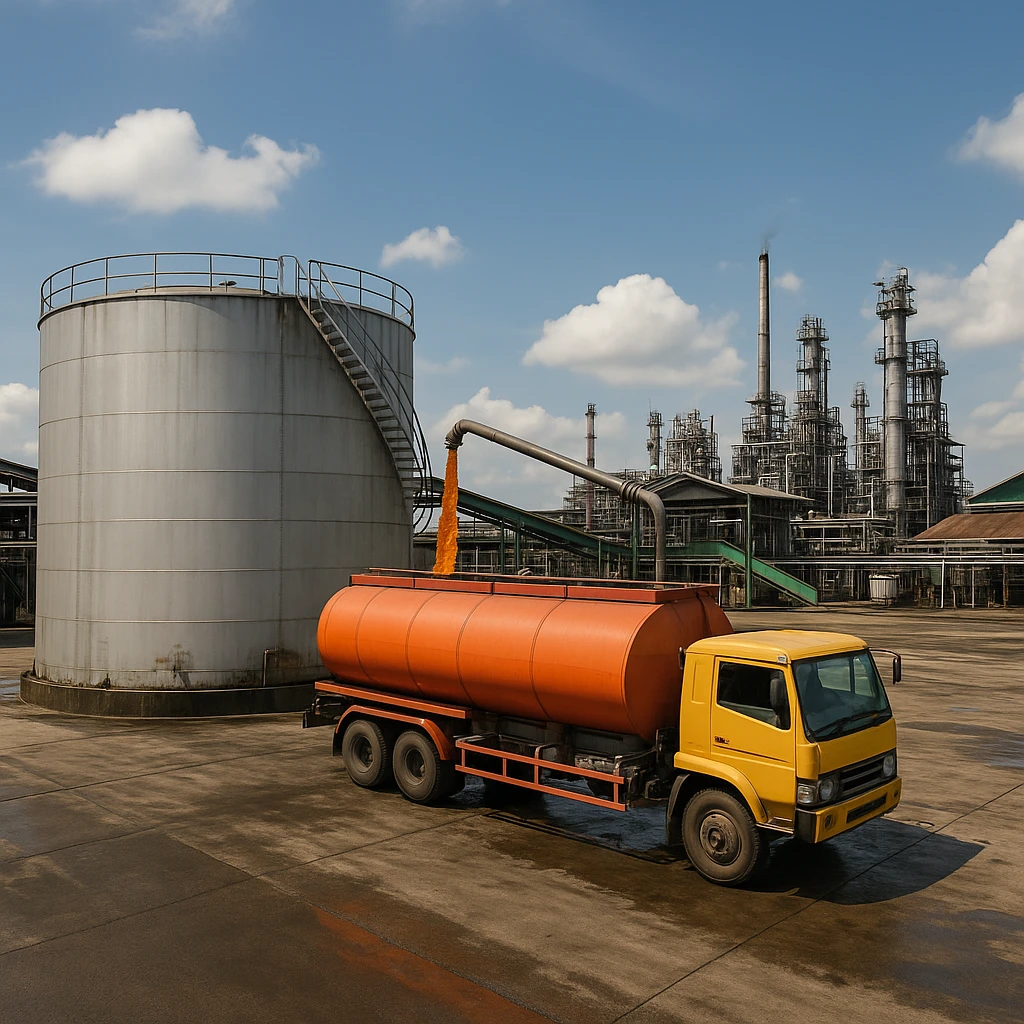
Palm oil futures extended gains on Monday, tracking strength in rival Dalian oils and firmer crude oil prices, according to market data. The positive momentum comes as the vegetable oil complex continues to draw support from the broader energy market, with the Middle East conflict reinforcing the link between crude and vegetable oil prices.
Indonesia officially launched its B50 biodiesel programme in mid-July, a policy that analysts say will significantly boost domestic palm oil consumption. The mandate, which requires a 50% palm oil-based biodiesel blend, is expected to absorb a larger share of the country's crude palm oil output. Industry officials have stated that current CPO supply can support B50 this year, though higher output will be needed in the future. The policy has already lifted sentiment across the market, with some analysts noting that Malaysian palm oil producers could benefit from the increased demand if Indonesia's domestic absorption tightens export availability.
India's edible oil imports fell 30% in June from a year earlier, driven by lower purchases of palm and soybean oil. The sharp monthly decline, reported by multiple sources, reflects high domestic stocks and elevated international prices. However, cumulative imports for the first eight months of the marketing year still show a 7% rise, with palm oil's share climbing to 48%. The contrasting data points suggest that while near-term buying has slowed, India's structural demand for palm oil remains intact.
The Malaysian Palm Oil Council has forecast CPO prices to range between MYR 4,400 and MYR 4,650 per tonne in July, citing a tightening supply outlook. Thailand's recent restrictions on palm oil exports are adding further pressure on regional availability, potentially redirecting buying interest toward Malaysia and Indonesia. Meanwhile, Indonesia is reportedly considering sanctions against companies purchasing palm oil at artificially low prices, a move that could support floor prices in the export market.
The ongoing Middle East conflict has deepened the correlation between crude oil and vegetable oil markets, as higher energy prices improve the economics of biodiesel blending. Indonesia's B50 mandate is particularly exposed to crude price fluctuations; a sustained drop in oil prices could test the programme's viability, as seen in earlier policy discussions. For now, the rally in crude is providing a tailwind for palm oil futures.
Buyers should monitor Indonesia's B50 implementation pace and any further tightening of export policies, as these factors could keep CPO prices elevated despite the recent slowdown in Indian purchasing. The interplay between crude oil trends and biodiesel mandates will remain a key driver of palm oil's price direction in the weeks ahead.
Sources: TradingView; BW Businessworld; Oils & Fats International; The Edge Malaysia; UkrAgroConsult; BioEnergy Times
Jakarta launches 50% biodiesel blend; CPO supply seen adequate for now but higher output needed, raising buyer vigilance.
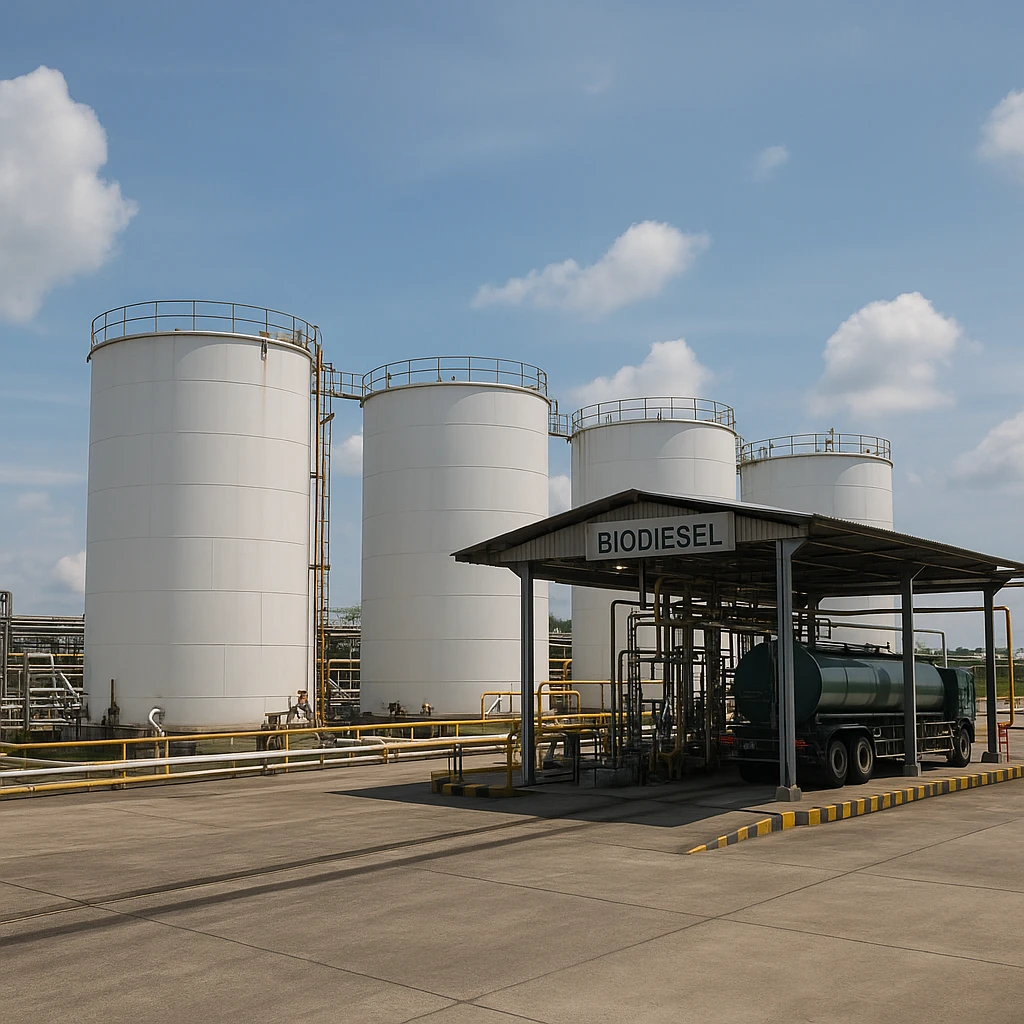
Indonesia has formally launched its B50 biodiesel programme, mandating a 50% blend of palm oil-based biodiesel in diesel fuel. The policy, confirmed by multiple outlets in mid-July 2026, represents a step change in domestic palm oil consumption and tightens the global supply-demand balance for crude palm oil (CPO).
Official statements indicate that current CPO supply can support the B50 mandate for the remainder of 2026. However, industry participants and state media reports note that higher output will be required ahead of 2027 to sustain the programme without drawing down stocks excessively. The Bengkulu provincial government has announced plans to build a dedicated biodiesel plant by 2027, signalling that local processing capacity is being expanded to meet rising demand.
The B50 mandate lifts domestic palm oil consumption significantly compared with the previous B35 programme. Analysts estimate that each percentage point increase in the biodiesel blend adds roughly 200,000–300,000 tonnes of CPO demand annually. With the blend rising from 35% to 50%, the additional demand could exceed 3 million tonnes per year, tightening export availability and supporting CPO prices.
Malaysian palm oil producers may benefit indirectly from Indonesia’s B50 rollout. As Indonesian exports shrink due to higher domestic absorption, buyers in India, China and the EU could shift more purchases to Malaysia, potentially lifting Malaysian CPO premiums. This dynamic is already being discussed in regional media as a potential tailwind for Malaysia’s palm oil sector.
The mandate faces a test from the recent decline in global oil prices. Lower crude oil prices make biodiesel less competitive without subsidies, raising questions about the fiscal sustainability of the B50 programme. Compliance-minded buyers should monitor Indonesia’s subsidy mechanism and any adjustments to the biodiesel export levy. If global oil prices remain low, the government may need to increase the levy on palm oil exports to fund the subsidy gap, which could further reduce export availability and raise delivered costs for importers.
For the remainder of 2026, the B50 mandate is likely to keep Indonesian CPO stocks lean and support prices. Buyers should prepare for tighter supply and potential price volatility. Longer-term, the success of B50 hinges on upstream expansion and sustained fiscal commitment. Market participants are advised to track monthly CPO output data and any policy adjustments from Jakarta.
Sources: BioEnergy Times; Quantum Commodity Intelligence; Oils & Fats International; mediaselangor.com; The Jakarta Post
A practical guide for procurement managers on the three key quality parameters in a palm oil CoA.
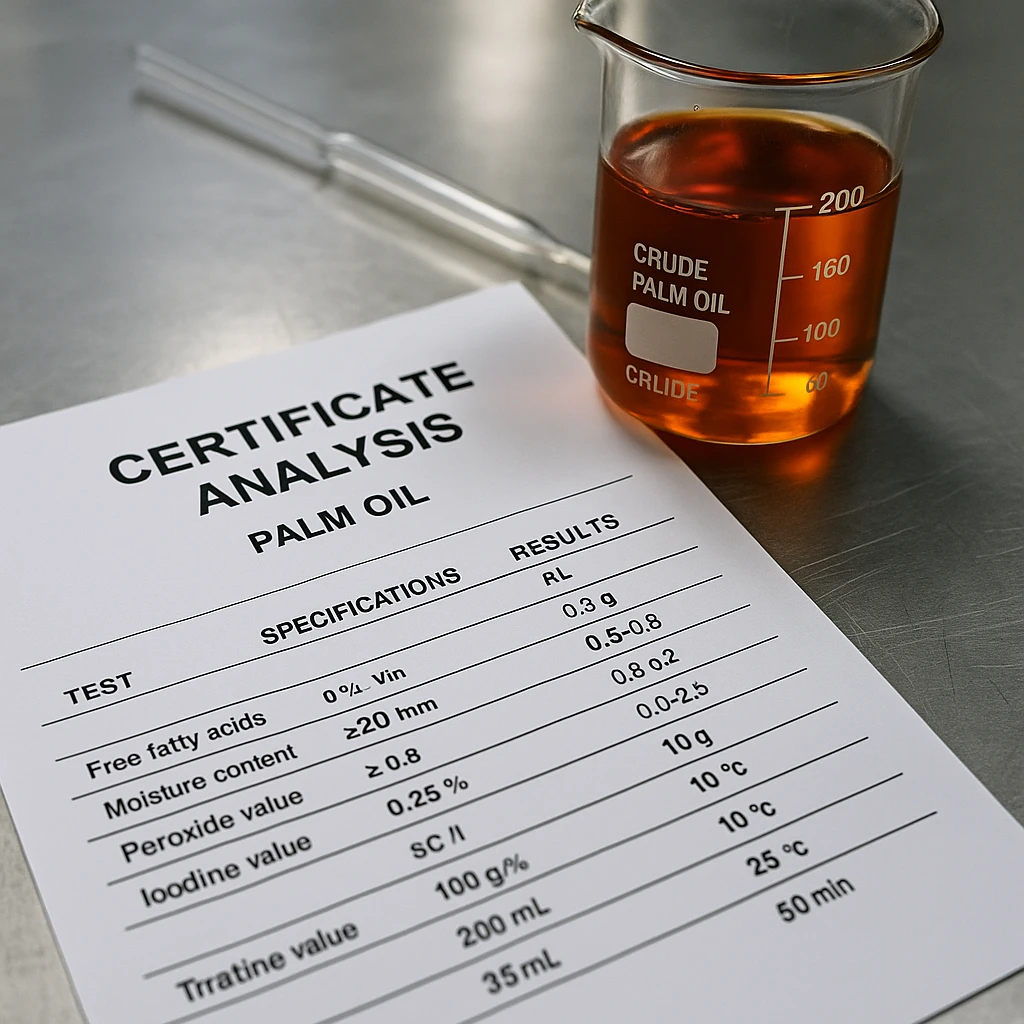
A Certificate of Analysis (CoA) is the standard document accompanying every shipment of crude palm oil (CPO) and its derivatives. For procurement managers and first-time buyers, three parameters dominate the report: free fatty acid (FFA), iodine value (IV), and moisture and impurities (M&I). Understanding what each measures—and why it matters—is essential for confirming product quality and contract compliance.
FFA indicates the degree of hydrolysis in the oil. During harvesting, handling or storage, the enzyme lipase can break triglycerides into free fatty acids and glycerol. Higher FFA means more oil has degraded, reducing yield for downstream refiners.
For buyers, FFA directly affects the refining loss and final product cost. Contracts usually specify a maximum FFA; exceeding that can trigger a price discount or rejection.
IV measures the degree of unsaturation in the oil—the number of carbon–carbon double bonds. It is determined by the amount of iodine absorbed by a fixed weight of oil. Higher IV means more unsaturated (softer) oil; lower IV means more saturated (harder) oil.
IV is not a quality defect but a compositional identity. Mismatched IV can cause processing issues or product failure.
M&I groups two contaminants that affect oil stability and storage life.
High M&I can lead to increased refining losses, off-flavours and shorter shelf life. The combined total (moisture + impurities) is often capped at 0.5% in CPO trade contracts.
A typical CoA lists each parameter with the test method (e.g., AOCS, ISO), the result, and the specification range. Buyers should check: - FFA against contract limit. - IV against the agreed fraction or grade. - M&I against maximum tolerance.
Any deviation should be flagged immediately. The CoA is the legal record of quality at the time of shipment; it protects both buyer and seller when disputes arise.
For first-time buyers, the CoA is not a formality—it is the first line of quality assurance. Learning to read it correctly prevents costly surprises at the refinery or factory gate.
Our market desk connects serious buyers with vetted origin suppliers across Southeast Asia. Indicative pricing, specifications and shipment guidance — free of charge.
Get connected →Jakarta launches 50% biodiesel blend; CPO supply seen adequate for now but higher output needed, raising buyer vigilance.
Full story — Page 2 ▸A practical guide for procurement managers on the three key quality parameters in a palm oil CoA.
Full story — Page 2 ▸CPO prices track stronger crude and soybean oil, supported by Indonesia's B50 launch, while India's June imports drop 30%.
Palm oil futures extended gains on Monday, tracking strength in rival Dalian oils and firmer crude oil prices, according to market data. The positive momentum comes as the vegetable oil complex continues to draw support from the broader energy market, with the Middle East conflict reinforcing the link between crude and vegetable oil prices.
Indonesia officially launched its B50 biodiesel programme in mid-July, a policy that analysts say will significantly boost domestic palm oil consumption. The mandate, which requires a 50% palm oil-based biodiesel blend, is expected to absorb a larger share of the country's crude palm oil output. Industry officials have stated that current CPO supply can support B50 this year, though higher output will be needed in the future. The policy has already lifted sentiment across the market, with some analysts noting that Malaysian palm oil producers could benefit from the increased demand if Indonesia's domestic absorption tightens export availability.
India's edible oil imports fell 30% in June from a year earlier, driven by lower purchases of palm and soybean oil. The sharp monthly decline, reported by multiple sources, reflects high domestic stocks and elevated international prices. However, cumulative imports for the first eight months of the marketing year still show a 7% rise, with palm oil's share climbing to 48%. The contrasting data points suggest that while near-term buying has slowed, India's structural demand for palm oil remains intact.
The Malaysian Palm Oil Council has forecast CPO prices to range between MYR 4,400 and MYR 4,650 per tonne in July, citing a tightening supply outlook. Thailand's recent restrictions on palm oil exports are adding further pressure on regional availability, potentially redirecting buying interest toward Malaysia and Indonesia. Meanwhile, Indonesia is reportedly considering sanctions against companies purchasing palm oil at artificially low prices, a move that could support floor prices in the export market.
The ongoing Middle East conflict has deepened the correlation between crude oil and vegetable oil markets, as higher energy prices improve the economics of biodiesel blending. Indonesia's B50 mandate is particularly exposed to crude price fluctuations; a sustained drop in oil prices could test the programme's viability, as seen in earlier policy discussions. For now, the rally in crude is providing a tailwind for palm oil futures.
Buyers should monitor Indonesia's B50 implementation pace and any further tightening of export policies, as these factors could keep CPO prices elevated despite the recent slowdown in Indian purchasing. The interplay between crude oil trends and biodiesel mandates will remain a key driver of palm oil's price direction in the weeks ahead.
Market eyes extended high CPO run as Indonesia’s biodiesel rollout and firm crude underpin prices.
Palm oil futures are poised for a second consecutive weekly gain, lifted by steady Indian demand and a supportive biofuel policy backdrop. The market is consolidating near recent highs as traders weigh tighter supply signals against a mixed demand picture.
India remains a key pillar of demand, despite a sharp 30% drop in edible oil imports in June. The decline was largely seasonal, and the eight-month trend still shows a 7% rise in total imports, with palm oil’s share climbing to 48%. This suggests underlying consumption growth is intact, even if monthly flows have cooled.
A more structural demand boost is coming from Indonesia’s B50 biodiesel mandate, officially launched this month. The programme, which mandates a 50% palm oil blend in diesel, is expected to redirect significant volumes of crude palm oil toward domestic fuel production. Indonesia’s government has stated that current CPO supply can support B50 this year, though higher output will be needed beyond 2026. The mandate has already lifted sentiment across the vegetable oil complex.
Supply fundamentals are tightening. The Malaysian Palm Oil Council (MPOC) has guided for CPO prices in the range of MYR 4,400–4,650 per tonne in July, citing a tighter supply outlook. Thailand’s recent restrictions on palm oil exports are also reshaping regional trade flows, potentially diverting more demand toward Malaysia and Indonesia.
Meanwhile, global crude oil prices remain firm, providing a floor for palm oil as a biodiesel feedstock. The Middle East conflict has reinforced this link, with vegetable oil markets increasingly sensitive to crude movements. Stronger soybean oil prices have also lent support to the palm oil complex.
Traders should monitor Indonesia’s B50 implementation pace and any policy adjustments, as well as India’s import patterns ahead of the festive season. The interplay between crude oil volatility and palm oil’s biofuel premium will remain a key price driver in the weeks ahead.
Sources: BusinessToday Malaysia; Oils & Fats International; The Edge Malaysia; CME Group; TradingView; BW Businessworld
Policy push lifts crude palm oil demand but raises questions on feedstock adequacy and compliance costs.
Indonesia has officially launched its B50 biodiesel programme, mandating a 50 percent blend of palm oil-based biodiesel in diesel fuel. The move, confirmed by multiple reports in early July 2026, represents a significant escalation in the country's biofuel policy and is expected to substantially increase domestic crude palm oil consumption.
Government statements indicate that current crude palm oil supply can support the B50 mandate this year, though officials acknowledge that higher output will be needed in the future to sustain the programme. The policy is part of a broader energy security push, but its timing coincides with a period of lower global oil prices, which could test the economic viability of the mandate.
The B50 mandate is set to absorb a larger share of Indonesia's palm oil production, tightening export availability. Analysts expect this to support global palm oil prices, as less supply reaches the international market. Malaysian palm oil sector observers have noted that Indonesia's policy could benefit Malaysian producers by reducing competition in export markets.
However, concerns are emerging from domestic stakeholders. Indonesian farmers have expressed worries about the impact of the mandate on feedstock availability and potential upward pressure on crude palm oil prices. The policy's success hinges on adequate supply from plantations and mills, as well as the ability of the biodiesel industry to scale up blending capacity.
Bengkulu province has announced plans to build its own biodiesel plant by 2027, signalling local government interest in participating in the biofuel supply chain. This development could help decentralise production and reduce logistical bottlenecks.
For compliance-minded buyers, the B50 mandate introduces new variables in supply planning. Importers of Indonesian palm oil may face reduced spot availability and higher premiums. The policy also reinforces the need for buyers to monitor domestic Indonesian policy shifts closely, as they directly affect export volumes and pricing dynamics.
The B50 rollout comes amid a broader global push for renewable energy, but Indonesia's aggressive blending target sets it apart from other producers. The mandate's long-term sustainability will depend on continued investment in plantation productivity, refinery capacity, and the evolution of global energy prices.
Sources: BioEnergy Times; Quantum Commodity Intelligence; Oils & Fats International; mediaselangor.com; The Jakarta Post
A step-by-step look at glycerine recovery from fat splitting, a key source of refined glycerine for buyers.
Oleochemical splitting—also called fat splitting or hydrolysis—is the industrial process that breaks triglycerides (fats and oils) into fatty acids and glycerine. The reaction uses high-pressure steam at temperatures around 250°C and pressures of about 50 bar, without catalysts. Water molecules attack the ester bonds, releasing free fatty acids and a dilute glycerine stream.
Once splitting is complete, the mixture separates into two phases: a fatty acid layer (top) and a sweetwater layer (bottom) containing roughly 10–20% crude glycerine, along with water, residual fats, and impurities.
1. Sweetwater Concentration The sweetwater is first evaporated to raise glycerine concentration to about 80–88%. This step removes most of the water, reducing volume for downstream processing.
2. Purification Concentrated crude glycerine undergoes purification to remove salts, organic residues, and color bodies. Common methods include: - Ion exchange to strip ionic impurities - Activated carbon treatment to adsorb color and odor compounds - Distillation under vacuum to separate high-purity glycerine from heavier fractions
3. Refining to Grades After purification, glycerine is typically refined to 99.5% or higher (USP/EP grade) or 80% technical grade, depending on end-use. The final product is clear, odorless, and hygroscopic.
Glycerine from oleochemical splitting is a consistent, high-purity co-product. Unlike biodiesel-derived glycerine (which often contains methanol and catalyst residues), splitting-derived glycerine requires less intensive refining. This makes it a preferred source for pharmaceutical, food, and personal-care applications.
Procurement managers should note that glycerine yields from splitting are roughly proportional to oil throughput—about 10% by weight of the feedstock oil. Supply availability is tied to fatty acid production, not independent glycerine demand, which can affect price stability.
Buyers specify glycerine by purity, color (APHA), and residual ash. Splitting-derived glycerine typically meets these specs with minimal variability. However, the feedstock oil quality—especially free fatty acid content and impurities—can influence the sweetwater composition and final refining cost.
Glycerine from oleochemical splitting competes with synthetic glycerine and biodiesel co-product. Its production is geographically concentrated near fatty acid plants in Southeast Asia and Europe. Understanding the recovery process helps buyers evaluate supply chain reliability and negotiate specifications with confidence.
Our market desk connects serious buyers with vetted origin suppliers across Southeast Asia. Indicative pricing, specifications and shipment guidance — free of charge.
Get connected →Policy push lifts crude palm oil demand but raises questions on feedstock adequacy and compliance costs.
Full story — Page 2 ▸A step-by-step look at glycerine recovery from fat splitting, a key source of refined glycerine for buyers.
Full story — Page 2 ▸Mixed signals as Indian imports drop sharply but Indonesia’s B50 mandate and rising Malaysian exports support prices.
Palm oil markets are navigating a week of conflicting signals, with prices edging higher on fresh demand drivers even as a key buyer pulls back.
India’s edible oil imports dropped 30% in June, with both palm and soybean oil purchases slowing sharply, according to industry data. The decline is the steepest in months, reflecting high domestic stocks and softer crushing margins. However, over the eight months to June, total imports still rose 7%, with palm oil’s share climbing to 48%.
This mixed picture suggests the June drop may be a temporary correction rather than a structural shift. Buyers are watching for any rebound in July-August shipments ahead of the festive season.
Indonesia has formally launched its B50 biodiesel programme, mandating 50% palm oil-based biodiesel blending. The policy is expected to boost domestic palm oil consumption significantly, with state media estimating savings of IDR 177 trillion and higher crude palm oil uptake. However, questions remain about supply adequacy. Indonesia’s industry ministry says current CPO output can support B50 this year, but higher production will be needed beyond 2026.
The mandate has already drawn attention from Malaysian producers, who could benefit if Indonesian supply tightens. Thailand has also tightened palm oil export controls, reshaping regional trade flows.
Malaysia’s palm oil exports rose in the first half of July, supporting a second consecutive weekly gain in futures. Prices are also being lifted by firmer crude oil and soybean oil values, with the Middle East conflict reinforcing the link between energy and vegetable oil markets.
Despite a slight easing on Friday, palm oil remains on track for a weekly gain. The CPO market is expected to trade in the MYR 4,400-4,650/tonne range in July, according to the Malaysian Palm Oil Council, as supply tightens.
The key tension to watch is between India’s import slowdown and Indonesia’s B50-driven demand surge. Any further escalation in Middle East energy markets could amplify price support, while a sustained Indian pullback would cap gains. Monitor weekly export data and India’s import pace for directional cues.
Sources: BW Businessworld; BusinessToday Malaysia; Sunsirs; Oils & Fats International; TradingView; UkrAgroConsult
New 50% biodiesel blend targets IDR 177 trillion savings but raises questions on feedstock availability and farmer impact.
Indonesia has officially launched its B50 biodiesel programme, mandating a 50% blend of palm oil-based biodiesel in diesel fuel. The policy, confirmed by multiple sources in mid-July 2026, is expected to significantly boost domestic palm oil consumption and reduce fuel import costs.
State media reports that B50 could save IDR 177 trillion annually while increasing crude palm oil (CPO) offtake. The government has indicated that current CPO supply can support the mandate this year, but acknowledged that higher output will be needed in the medium term to sustain the programme without disrupting export availability.
The B50 mandate represents a step change from the previous B35 blend, adding roughly 7-8 million tonnes of additional CPO demand per year, according to industry estimates. This could tighten global palm oil supplies, especially if production growth lags.
Malaysian industry observers have noted that neighbouring producers may benefit from any shortfall in Indonesian exports, as buyers seek alternative origins. However, the overall effect is likely to keep benchmark prices supported.
For compliance-minded buyers, the policy introduces several considerations: - Supply availability: Export volumes from Indonesia may shrink as domestic biodiesel absorption rises, potentially tightening the global market. - Sustainability scrutiny: Increased palm oil use for fuel raises questions about land-use change and deforestation, which could affect EU and other regulated market access. - Price volatility: The mandate's success depends on global crude oil prices; recent oil price declines have tested the economics of high-blend biodiesel.
Some Indonesian farmer groups have expressed worry that the B50 mandate could push up local CPO prices, making it harder for smallholders to access affordable cooking oil. Others fear that pressure to boost yields may accelerate plantation expansion into sensitive areas.
The government has promised support for productivity improvements, but implementation remains a challenge.
Indonesia's B50 rollout is a defining policy for global palm oil markets in 2026. While it shores up domestic demand and reduces fuel import bills, the strain on supply chains and the need for sustainable production growth will be key watchpoints. Buyers should monitor export availability, price trends and regulatory updates closely.
Sources: BioEnergy Times; Oils & Fats International; mediaselangor.com; Quantum Commodity Intelligence; The Jakarta Post
A neutral look at the biological and agronomic factors behind oil palm’s unmatched land-use efficiency.
Oil palm (*Elaeis guineensis*) consistently produces about four to five times more vegetable oil per hectare than rapeseed, sunflower, or soybean. This efficiency is not a recent development; it is a well-documented characteristic of the crop, rooted in its physiology and cultivation.
The oil palm is a perennial tropical tree, not an annual field crop. It photosynthesises year-round in equatorial climates, converting sunlight into fruit continuously. Each fruit bunch contains hundreds of individual fruits, each with a high oil content in both the mesocarp (palm oil) and kernel (palm kernel oil).
A mature palm can produce 10 to 15 fresh fruit bunches per year, each weighing 10 to 30 kilograms. This constant fruiting cycle, combined with the tree’s large leaf canopy for capturing sunlight, allows it to accumulate oil far more efficiently than short-season crops like soybean, which grow for only a few months per year.
Commercial oil palm plantations use high-yielding hybrid varieties, such as tenera, which are bred for thicker mesocarp and higher oil extraction rates. Standard practices include precise spacing (about 130 to 150 palms per hectare), regular fertilisation, and pest management. These inputs maximise fruit set and oil content per bunch.
Harvesting occurs every 10 to 14 days, ensuring fruit is collected at peak ripeness. Fresh fruit bunches are processed within 24 hours to prevent free fatty acid buildup, preserving oil quality. Mills extract crude palm oil using mechanical pressing, achieving extraction rates of roughly 20 to 25 percent of bunch weight.
Because oil palm yields more oil per hectare, it requires less land to meet the same volume of vegetable oil demand. This land-use efficiency is a key reason palm oil dominates global trade. For procurement managers, this translates into a stable, high-density supply chain from a relatively small planted area.
For first-time palm product buyers, the yield advantage means that palm oil is typically the lowest-cost vegetable oil on the market, reflecting lower land and production costs per tonne. It also implies that sourcing from certified sustainable plantations can reduce the total land footprint of your vegetable oil supply.
Understanding these fundamentals helps buyers evaluate price, supply reliability, and sustainability claims without relying on transient market data.
Our market desk connects serious buyers with vetted origin suppliers across Southeast Asia. Indicative pricing, specifications and shipment guidance — free of charge.
Get connected →New 50% biodiesel blend targets IDR 177 trillion savings but raises questions on feedstock availability and farmer impact.
Full story — Page 2 ▸A neutral look at the biological and agronomic factors behind oil palm’s unmatched land-use efficiency.
Full story — Page 2 ▸CPO futures slip as competing edible oils weaken, while Indonesia’s B50 program and a Middle East crude link reshape the outlook.

Palm oil futures edged lower on Thursday, tracking losses in rival edible oils, as market attention shifts back to supply-demand fundamentals after a period of geopolitical volatility.
Malaysian crude palm oil futures slipped again on July 16, following a decline in soybean and other vegetable oil markets. The pullback comes after a brief rebound earlier in the week, when stronger crude oil and soybean oil prices had lifted the complex. The seesaw movement underscores palm oil’s continued sensitivity to external vegetable oil markets and energy prices.
Analysts at UkrAgroConsult note that the Middle East conflict has reinforced the link between vegetable oil prices and crude oil, a dynamic that has added an extra layer of volatility. Meanwhile, StoneX observes that markets are now returning to fundamental drivers after a period dominated by macro and geopolitical noise. The shift suggests that supply-demand balances and policy developments will carry more weight in the near term.
Indonesia’s B50 biodiesel mandate, officially launched this week, is set to consume an estimated 23.3 million tonnes of crude palm oil annually, according to Jakarta Globe. While the government insists current supply can support the programme this year, industry sources warn that higher output will be needed in the future. The mandate could divert significant volumes away from export markets, potentially tightening global availability. Some analysts estimate the policy risks $2.7 billion in lost palm oil export revenue, though Jakarta expects savings of IDR 177 trillion from reduced fuel imports.
Malaysian producers may benefit from any shortfall in Indonesian exports, with local officials noting that the B50 programme could boost demand for Malaysian palm oil in key markets.
Indonesia is also considering sanctions against buyers who purchase palm oil at artificially low prices, a move aimed at protecting domestic margins. Separately, the country’s palm oil association has signed an MoU with Russia to expand trade cooperation, potentially opening new export channels.
Thailand has tightened its palm oil export controls, reshaping regional supply flows. Malaysia, for its part, has raised the August crude palm oil reference price while keeping the export duty unchanged at 10%.
India’s edible oil imports fell 30% in June from the previous year, driven by lower purchases of both palm and soybean oils. Despite the monthly drop, imports over the past eight months are up 7%, with palm oil’s share rising to 48%. The decline in June may reflect inventory adjustments and price sensitivity, but the longer-term trend points to steady demand.
Watch Indonesia’s B50 implementation pace and any enforcement of export restrictions; these could tighten palm oil supply faster than expected. Also monitor crude oil moves and soybean oil spreads, as palm’s price direction remains tied to the broader vegetable oil complex.
Sources: UkrAgroConsult; ChemAnalyst; Jakarta Globe; Finimize; Fastmarkets; BioEnergy Times
Malaysian CPO flat; MPOB data shows rising stocks and production; El Niño and biodiesel policy lend support, but Kalimantan dryness and seasonal weakness cap gains.
Malaysian crude palm oil futures closed little changed around $1,104 per tonne today, as conflicting signals keep the market in a tight range. The flat session comes despite a 9.8% surge in Brent crude oil to $82/bbl, which bolsters biodiesel blending economics and strengthens the demand outlook for palm-based fuels.
The latest MPOB data for June 2026 shows Malaysian CPO production rose 8.1% month-on-month to 1.638 million tonnes, while closing stocks increased 3.7% to 1.332 million tonnes. The stock build is in line with seasonal patterns and contributed to the market's capped upside. Exports managed a 6.2% monthly gain to 1.204 million tonnes, but that was overshadowed by a sharp 135% surge in imports—a sign of inter-market arbitrage flows. The FFB reference price eased 1.3% to RM 48.90.
India's June vegetable oil imports plunged 29% year-on-year as the once-generous palm oil discount over soft oils has narrowed sharply. This is a major bearish factor for palm oil exports, as India remains the world's top buyer. Buyers should note that any further erosion in palm's price advantage will keep Indian demand subdued.
On the policy front, Indonesia's launch of the B50 biodiesel programme—requiring 23.3 million tonnes of CPO annually—provides a solid medium-term demand floor. This was reinforced by Jakarta Globe's report highlighting the massive feedstock needs. Combined with the spike in crude oil, biodiesel blending margins improve, making the mandate more attractive for obligated parties.
Malaysia's decision to keep the August CPO reference price elevated while maintaining the 10% export duty offers no immediate relief for buyers seeking lower-priced supply.
The ongoing El Niño (ONI +1.0) is bringing dry conditions to Kalimantan, a key production region in Indonesia. Dry weather could curb yields in the coming months, adding a supply risk premium that may support prices into the second half of the year. However, our model outlook also flags seasonal July weakness, which typically sees lower demand as buyers wait for new-crop arrivals.
The European Commission has finalised the product scope for the EU Deforestation Regulation, excluding leather but retaining palm oil. This removes some uncertainty for exporters, but compliance costs remain a factor.
Sources: Jakarta Globe; UkrAgroConsult; Oils & Fats International; The Economic Times; The Star; environment.ec.europa.eu
Higher production and weaker demand keep palm oil prices capped despite biodiesel support.
Malaysia's crude palm oil production rose sharply in June, up 8.1% from the previous month to 1.638 million tonnes, according to MPOB data. This lifted closing stocks to 1.332 million tonnes, a 3.7% month-on-month increase, as inventory accumulation outpaced export growth.
Palm oil exports rose 6.2% month-on-month to 1.204 million tonnes during the same period. However, imports surged 135.3% to 103,113 tonnes, likely as local processors bought cheaper Indonesian supply. The net effect was a supply build-up, which typically exerts downward pressure on prices.
Despite the bearish stock data, the benchmark CPO futures held steady around $1,104/tonne, with a slight 0.1% gain. This stability can be attributed to soaring crude oil prices—Brent jumped 9.8% to about $82/bbl—which improves biodiesel blending economics. Additionally, Indonesia's push for a B50 biodiesel mandate supports overall demand for palm-based fuel.
El Niño conditions (ONI +1.0) continue to raise concerns about future output, though current rainfall patterns show dryness in Kalimantan. The FFB reference price slipped 1.3% to RM 48.90, indicating some weakness in upstream margins. Seasonal July trends often bring weaker demand, which may cap price gains.
Our model outlook suggests CPO prices will see modest gains but remain volatile. Support from surging Brent crude, biodiesel mandates, and El Niño worries is countered by soft Indian demand, dry weather in key growing areas, and the typical seasonal slowdown. The market remains finely balanced between supply concerns and near-term stock pressure.
Overall, the June data points to a loosening supply-demand balance in Malaysia, with rising production and stocks outpacing export recovery. The market's resilience hinges on external energy prices and policy-driven demand, which may keep prices from falling sharply.
Jakarta’s 35% biodiesel blend target locks in 23.3 Mt of domestic CPO, raising export risk and opening arbitrage for Malaysia.

Indonesia’s formal launch of the B50 biodiesel programme on 14 July 2026 marks the most aggressive biofuel mandate in the palm oil sector’s history. Under the new policy, the country will require 23.3 million tons of crude palm oil annually to meet blending targets, according to official estimates. The figure represents roughly a third of Indonesia’s total CPO output, effectively locking a large share of supply into the domestic energy market.
Industry analysts point out that diverting such a volume of CPO to biodiesel production will inevitably reduce the amount available for export. Several reports have flagged that the mandate could cost Indonesia up to $2.7 billion in lost palm oil export revenue. Compliance-minded buyers in India, China and the EU are now watching for any tightening of FOB offers out of Belawan and Dumai as domestic absorption rises.
The neighbouring producer Malaysia has already signalled that its palm oil sector could benefit from Indonesia’s domestic pull. On 15 July, Kuala Lumpur set the August crude palm oil reference price higher while keeping the export duty unchanged at 10%. This pricing structure may encourage Malaysian sellers to step in where Indonesian supply tightens, particularly for refined products. The spread between RBD palm olein from the two origins is expected to narrow as Indonesian sellers prioritise local biodiesel mandates.
While Indonesian officials have stated that current CPO supply can support B50 this year, they acknowledge that higher output will be needed in the medium term. The mandate comes at a time when global crude oil prices have tumbled, potentially undermining the economics of biodiesel blending. A Reuters report from late June noted that the biofuel programme faces a serious test if petroleum prices stay low, as the subsidy burden on the state budget could rise sharply.
For palm oil procurement desks, the key takeaway is that Indonesia’s domestic CPO absorption is structurally rising. Compliance-driven buyers—especially those sourcing for EU Renewable Energy Directive obligations—should monitor Indonesian export availability closely and consider diversifying origin to Malaysia. The B50 programme’s hidden costs, including potential land-use pressure and higher domestic CPO prices, will shape the market’s supply-demand balance for the rest of 2026 and beyond.
Sources: Jakarta Globe; BioEnergy Times; TradingView; Oils & Fats International; The Jakarta Post
Biodiesel push requires 23.3M tonnes CPO yearly; Malaysia keeps duty at 10%; EU updates deforestation compliance tools.
Indonesia has officially launched its B50 biodiesel programme, requiring an estimated 23.3 million tonnes of crude palm oil annually to meet the mandate. This represents a significant increase in domestic CPO consumption, tightening supply availability for export markets. The B50 blend, up from previous B35, underscores Indonesia’s commitment to expanding palm oil-based fuel use amid rising global energy prices.
Malaysia has raised its August crude palm oil reference price but kept the export duty unchanged at 10%. This stability supports export competitiveness for Malaysian CPO producers, though the reference price adjustment may influence pricing dynamics. The policy contrast with Indonesia’s growing domestic absorption could shift trade flows.
The European Commission has updated the product scope and digital tools for implementing the EU Deforestation Regulation (EUDR). Compliance-minded buyers now face refined due diligence requirements, with enhanced digital systems for tracking deforestation-free supply chains. This adds urgency for exporters to ensure traceability, particularly as EUDR enforcement approaches.
Indonesia’s B50 mandate is poised to tighten global palm oil supplies, as a larger share of production is diverted to biodiesel. This supports palm oil prices but pressures buyers who rely on Indonesian exports. Meanwhile, Malaysia’s steady duty offers an alternative supply source, though its output is more limited. The EUDR updates increase compliance costs and risk for buyers without robust traceability systems, potentially widening price premiums for certified sustainable palm oil.
Buyers should prepare for sustained tightness from Indonesia and higher due diligence costs from EUDR compliance. Malaysian palm oil may see increased demand as a substitute, but overall supply constraints are likely to persist. Prices could remain elevated, with volatility driven by biodiesel policy and regulatory shifts.
Sources: Jakarta Globe; UkrAgroConsult; Oils & Fats International
A neutral, step-by-step guide to glycerine recovery during fat splitting for procurement and new buyers.
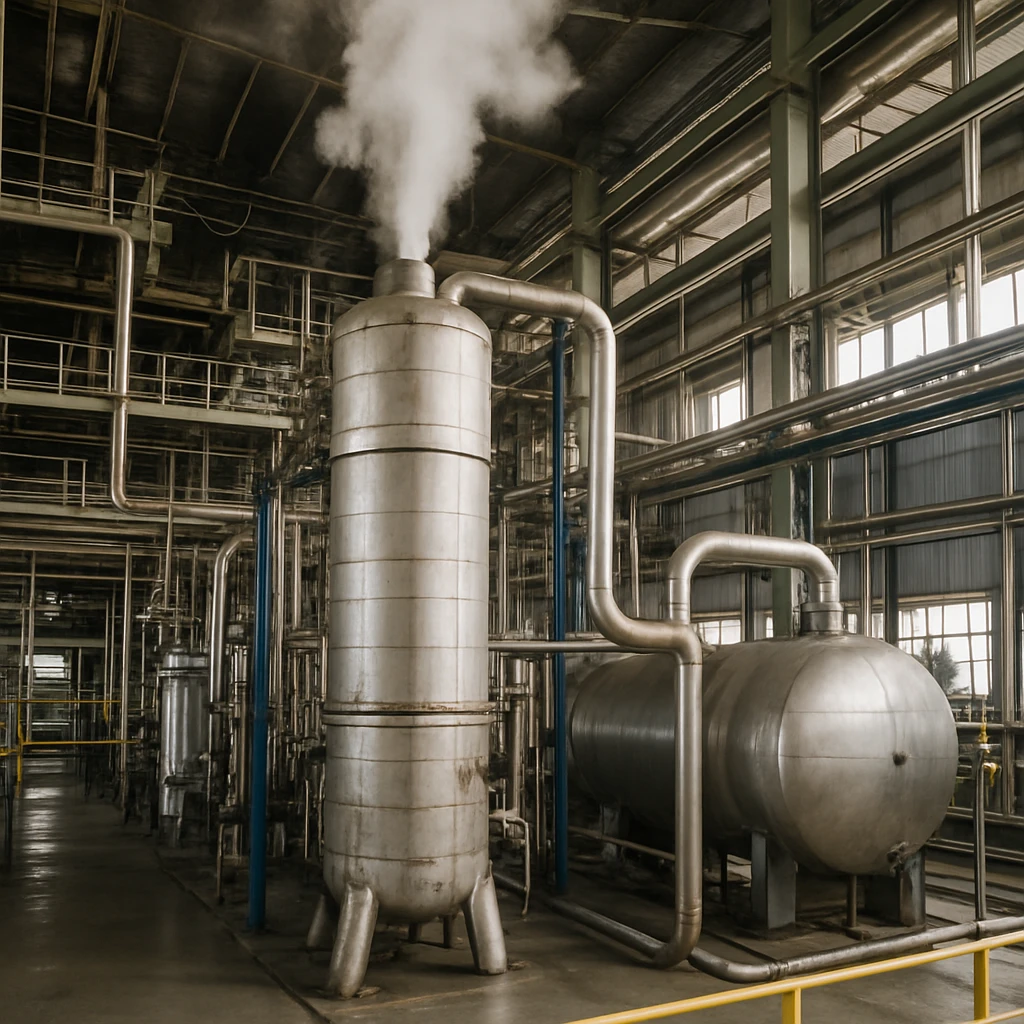
Glycerine is a co-product of the oleochemical splitting process, in which natural fats and oils are hydrolyzed into fatty acids and glycerol. This explainer covers the recovery steps for palm-based glycerine.
In oleochemical splitting, palm oil or palm kernel oil is reacted with high-pressure steam at temperatures around 250°C. This breaks the triglyceride molecules into free fatty acids and crude glycerine. The reaction is typically carried out in a continuous countercurrent column.
The output stream contains two phases: a fatty acid phase and a sweetwater phase. The sweetwater is a dilute solution of glycerine in water, typically containing 10–20% glycerol by weight.
Buyers should be aware of common specifications: - Glycerol content: Typically 99.5% minimum for refined grades. - Moisture content: Usually below 0.5%. - Color: Measured on the APHA scale; below 20 is typical for premium grades. - Ash and MONG: Material other than glycerine (MONG) and ash content are controlled.
Glycerine from palm oil splitting is a major source of global supply. It competes with glycerine from biodiesel production (a by-product of transesterification). Oleochemical glycerine tends to be higher purity and more consistent in quality.
For first-time buyers, understanding the recovery process helps in evaluating supplier quality claims and negotiating specifications.
What procurement managers and buyers need to know about the EU Deforestation Regulation's data demands.
Our market desk connects serious buyers with vetted origin suppliers across Southeast Asia. Indicative pricing, specifications and shipment guidance — free of charge.
Get connected →Malaysian CPO flat; MPOB data shows rising stocks and production; El Niño and biodiesel policy lend support, but Kalimantan dryness and seasonal weakness cap gains.
Full story — Page 2 ▸Higher production and weaker demand keep palm oil prices capped despite biodiesel support.
Full story — Page 2 ▸Jakarta’s 35% biodiesel blend target locks in 23.3 Mt of domestic CPO, raising export risk and opening arbitrage for Malaysia.
Full story — Page 2 ▸Biodiesel push requires 23.3M tonnes CPO yearly; Malaysia keeps duty at 10%; EU updates deforestation compliance tools.
Full story — Page 2 ▸A neutral, step-by-step guide to glycerine recovery during fat splitting for procurement and new buyers.
Full story — Page 2 ▸What procurement managers and buyers need to know about the EU Deforestation Regulation's data demands.
Full story — Page 2 ▸CPO futures slip as competing edible oils weaken, while Indonesia’s B50 program and a Middle East crude link reshape the outlook.
Palm oil futures edged lower on Thursday, tracking losses in rival edible oils, as market attention shifts back to supply-demand fundamentals after a period of geopolitical volatility.
Malaysian crude palm oil futures slipped again on July 16, following a decline in soybean and other vegetable oil markets. The pullback comes after a brief rebound earlier in the week, when stronger crude oil and soybean oil prices had lifted the complex. The seesaw movement underscores palm oil’s continued sensitivity to external vegetable oil markets and energy prices.
Analysts at UkrAgroConsult note that the Middle East conflict has reinforced the link between vegetable oil prices and crude oil, a dynamic that has added an extra layer of volatility. Meanwhile, StoneX observes that markets are now returning to fundamental drivers after a period dominated by macro and geopolitical noise. The shift suggests that supply-demand balances and policy developments will carry more weight in the near term.
Indonesia’s B50 biodiesel mandate, officially launched this week, is set to consume an estimated 23.3 million tonnes of crude palm oil annually, according to Jakarta Globe. While the government insists current supply can support the programme this year, industry sources warn that higher output will be needed in the future. The mandate could divert significant volumes away from export markets, potentially tightening global availability. Some analysts estimate the policy risks $2.7 billion in lost palm oil export revenue, though Jakarta expects savings of IDR 177 trillion from reduced fuel imports.
Malaysian producers may benefit from any shortfall in Indonesian exports, with local officials noting that the B50 programme could boost demand for Malaysian palm oil in key markets.
Indonesia is also considering sanctions against buyers who purchase palm oil at artificially low prices, a move aimed at protecting domestic margins. Separately, the country’s palm oil association has signed an MoU with Russia to expand trade cooperation, potentially opening new export channels.
Thailand has tightened its palm oil export controls, reshaping regional supply flows. Malaysia, for its part, has raised the August crude palm oil reference price while keeping the export duty unchanged at 10%.
India’s edible oil imports fell 30% in June from the previous year, driven by lower purchases of both palm and soybean oils. Despite the monthly drop, imports over the past eight months are up 7%, with palm oil’s share rising to 48%. The decline in June may reflect inventory adjustments and price sensitivity, but the longer-term trend points to steady demand.
Watch Indonesia’s B50 implementation pace and any enforcement of export restrictions; these could tighten palm oil supply faster than expected. Also monitor crude oil moves and soybean oil spreads, as palm’s price direction remains tied to the broader vegetable oil complex.
Futures slip as rival oils soften; Indonesia’s B50 mandate and India’s import slump reshape demand signals.

Palm oil futures edged lower on 16 July, tracking losses in rival edible oils amid tepid market sentiment. The decline came despite a crude oil rally that had briefly supported vegetable oil prices earlier in the week. Traders noted that the market lacked fresh bullish catalysts, with buying interest subdued across the board.
Indonesia’s launch of the B50 biodiesel programme, confirmed by multiple reports, is expected to redirect a significant portion of domestic crude palm oil (CPO) supply toward fuel blending. Industry officials stated that current CPO output can support the mandate this year, though higher production will be needed in the medium term. The policy could reduce export availability and tighten global palm oil supplies, but it also risks diverting revenue away from overseas sales.
India, the world’s largest vegetable oil importer, saw a sharp 29-30% year-on-year drop in June imports, driven by lower palm and soybean oil purchases. The decline was attributed to a narrowing discount of palm oil to soft oils, which reduced its competitive edge. Over the eight months to June, however, total edible oil imports still rose 7%, with palm oil’s share climbing to 48%.
Malaysia raised its August crude palm oil reference price while keeping the export duty unchanged at 10%. This adjustment reflects ongoing price support from stronger crude oil and soybean oil markets earlier in the week. Meanwhile, Thailand’s tightening of palm oil exports is reshaping regional supply flows, potentially benefiting Malaysian exporters.
A pricing notice from Fastmarkets proposed discontinuing the palm oil RBD FOB US West Coast assessment and amending the US Gulf methodology, indicating shifting trade patterns and liquidity in North American markets.
The interplay between Indonesia’s B50 mandate, India’s import slowdown, and volatile crude oil prices will dominate near-term price direction. Buyers should monitor whether the biodiesel policy materially reduces export volumes and how India’s demand recovers in the coming months.
Sources: Finimize; Business Recorder; UkrAgroConsult; BioEnergy Times; TradingView; RuralVoice
New biodiesel mandate lifts domestic demand as Malaysia holds duty steady; compliance buyers eye feedstock availability
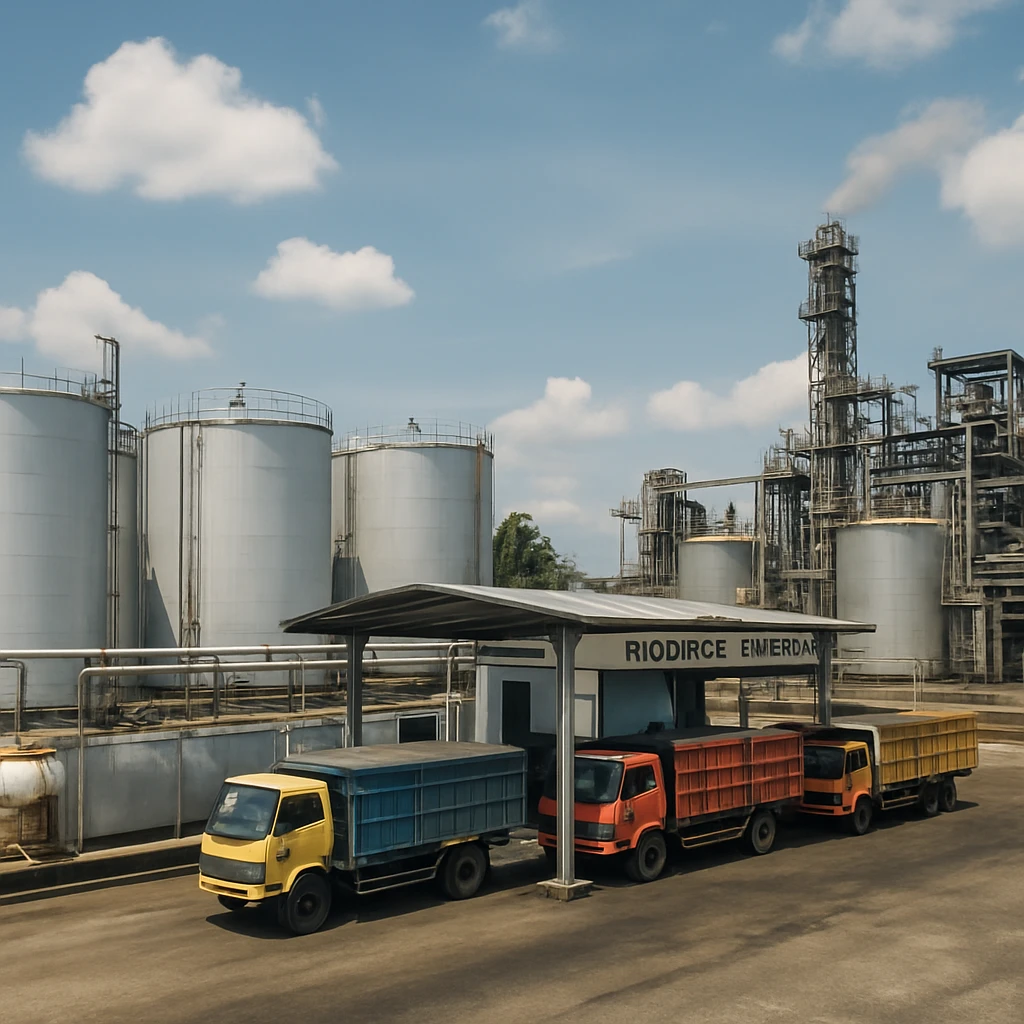
Indonesia’s formal launch of the B50 biodiesel programme on July 14 marks a structural shift in palm oil demand, with the government stating that current crude palm oil supply can support the mandate this year but that higher output will be needed ahead.
The B50 mandate requires a 50% palm oil blend in biodiesel, up from the previous B35 level. Analysts estimate the policy could divert up to $2.7 billion in export-grade palm oil to domestic fuel consumption, tightening global availability. The Jakarta Post reported that the programme is already lifting palm oil demand, while energynews.pro flagged the revenue risk for exporters.
Indonesian farmers have voiced worries about the mandate’s impact on their operations, according to the Jakarta Globe. The government acknowledges that while CPO supply is adequate for 2026, production must ramp up to sustain B50 in the medium term. This creates a delicate balance: higher domestic absorption may reduce exportable surpluses, supporting global prices but squeezing margins for producers who rely on export markets.
Malaysia raised its August crude palm oil reference price but kept the export duty unchanged at 10%, a move that keeps its palm oil competitive relative to Indonesian supplies facing higher domestic diversion. Some analysts suggest Malaysia’s sector could benefit if Indonesian exports shrink, as reported by mediaselangor.com.
For compliance-minded buyers, the B50 rollout reinforces the need to secure long-term supply contracts and monitor Indonesian policy shifts. The programme’s success hinges on feedstock availability and global oil prices, which have tested biofuel economics after recent crude price declines. Buyers should expect tighter CPO availability from Indonesia, potential price premiums for certified sustainable palm oil, and increased volatility as the mandate’s implementation unfolds.
The policy underscores a broader trend: major palm oil producers are prioritising domestic energy security over export maximisation, reshaping trade flows and risk profiles for global buyers.
Sources: BioEnergy Times; TradingView; Oils & Fats International; mediaselangor.com; energynews.pro
A practical guide to the due diligence and documentation requirements for placing palm oil on the EU market
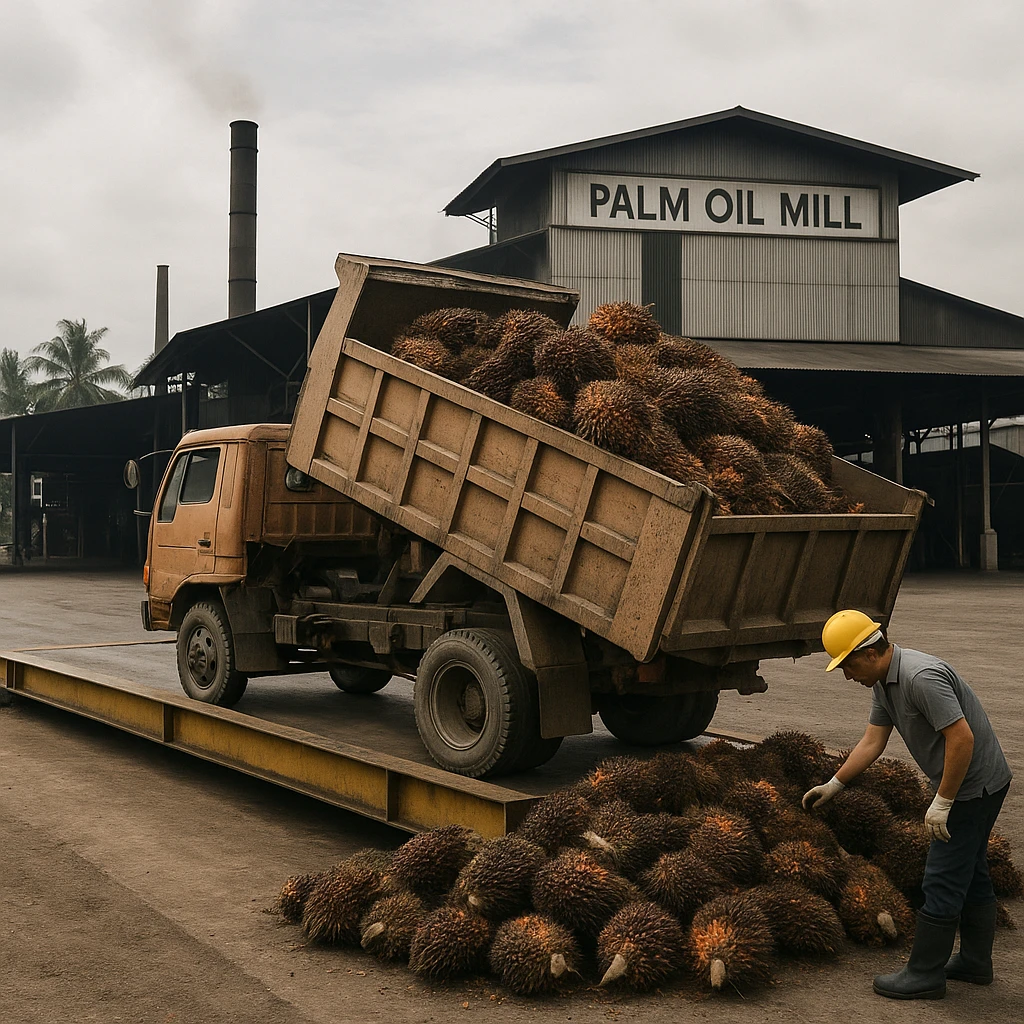
The European Union Deforestation Regulation (EUDR) sets mandatory due diligence rules for companies placing palm oil and other commodities on the EU market. Unlike earlier voluntary schemes, the EUDR is a legal requirement with enforcement and penalties.
Importers must prove three things for each shipment: the product is deforestation-free, it was produced in compliance with relevant local laws, and a due diligence statement has been filed.
Deforestation-free means the palm oil was produced on land that has not been subject to deforestation after 31 December 2020. This includes both legal and illegal deforestation. The definition also covers forest degradation.
Legal compliance requires verification that the producer adhered to all applicable laws in the country of production, including land-use rights, labour rights, environmental protection, and tax rules.
Importers must collect information, assess risk, and take mitigation steps. The process has three steps:
Geolocation is the cornerstone of the regulation. Each shipment must be traceable back to the individual plots of land. This requires a chain of custody system that links the crude palm oil or processed fractions to specific plantations.
Smallholder inclusion remains a practical challenge. Many smallholders lack formal land titles or the ability to provide precise coordinates. Importers must work with suppliers to map smallholder plots and establish traceability systems.
A due diligence statement must be submitted to the competent authority in the EU member state of first entry. The statement confirms that the product complies with the regulation and includes all supporting evidence. Statements are valid for a limited period and must be renewed.
Penalties vary by member state but can include fines proportional to the environmental damage, confiscation of products, temporary suspension of market access, and exclusion from public procurement. Repeat offenders may face criminal liability.
Procurement managers should:
The EUDR represents a shift from voluntary certification to mandatory legal compliance. Importers who build robust traceability and documentation systems will be best positioned to maintain market access.
This space reaches palm oil buyers, traders and industry readers every day. Sponsorship and advertising enquiries are welcome — get in touch:
New biodiesel mandate lifts domestic demand as Malaysia holds duty steady; compliance buyers eye feedstock availability
Full story — Page 2 ▸A practical guide to the due diligence and documentation requirements for placing palm oil on the EU market
Full story — Page 2 ▸Futures slip as rival oils soften; Indonesia’s B50 mandate and India’s import slump reshape demand signals.
Palm oil futures edged lower on 16 July, tracking losses in rival edible oils amid tepid market sentiment. The decline came despite a crude oil rally that had briefly supported vegetable oil prices earlier in the week. Traders noted that the market lacked fresh bullish catalysts, with buying interest subdued across the board.
Indonesia’s launch of the B50 biodiesel programme, confirmed by multiple reports, is expected to redirect a significant portion of domestic crude palm oil (CPO) supply toward fuel blending. Industry officials stated that current CPO output can support the mandate this year, though higher production will be needed in the medium term. The policy could reduce export availability and tighten global palm oil supplies, but it also risks diverting revenue away from overseas sales.
India, the world’s largest vegetable oil importer, saw a sharp 29-30% year-on-year drop in June imports, driven by lower palm and soybean oil purchases. The decline was attributed to a narrowing discount of palm oil to soft oils, which reduced its competitive edge. Over the eight months to June, however, total edible oil imports still rose 7%, with palm oil’s share climbing to 48%.
Malaysia raised its August crude palm oil reference price while keeping the export duty unchanged at 10%. This adjustment reflects ongoing price support from stronger crude oil and soybean oil markets earlier in the week. Meanwhile, Thailand’s tightening of palm oil exports is reshaping regional supply flows, potentially benefiting Malaysian exporters.
A pricing notice from Fastmarkets proposed discontinuing the palm oil RBD FOB US West Coast assessment and amending the US Gulf methodology, indicating shifting trade patterns and liquidity in North American markets.
The interplay between Indonesia’s B50 mandate, India’s import slowdown, and volatile crude oil prices will dominate near-term price direction. Buyers should monitor whether the biodiesel policy materially reduces export volumes and how India’s demand recovers in the coming months.