CPO near 52-week highs as biodiesel demand meets peak output
Malaysian benchmark $1,158/MT with ample July stocks and El Niño dryness; biodiesel levies and soy spread support, but RSI 78 hints consolidation.

Malaysian CPO is up 4.6% in seven days and near its 52-week high, but our model’s balance of factors gives the downside a 5-4 edge.

Malaysian crude palm oil benchmark is about $1,158/MT, or roughly RM4,684/MT, up 1.2% from the previous session. The wider market remains elevated: the World Bank palm oil benchmark is about $1,101/MT and Indonesia’s Kemendag reference price is about $997/MT. Against a softer Brent crude price of about $93/bbl and a USD/MYR rate of about 4.04, the Malaysian contract is near the top of its 52-week range after a 4.6% gain over the past seven days.
The largest structural support is the soy-palm spread. Soybean oil is quoted at about $1,506/MT, leaving palm at a discount of about $346/MT. That discount is wide enough to encourage price-sensitive buyers to switch demand into palm oil for food and industrial use, which keeps physical offtake active even as prices rise.
Indonesian export policy is also squeezing trade. The August reference price of $997/MT triggers a $125/MT export levy plus a $148/MT export duty, a combined $273/MT charge on Indonesian shipments. That makes Indonesian cargoes relatively less competitive and shifts marginal demand toward Malaysian supply, tightening the pool of cheaper exportable oil and supporting the Malaysian benchmark.
Biodiesel mandates continue to provide a demand floor. Indonesia’s B40 program is in force and B50 is being phased in, absorbing an estimated 3–4 million tonnes of palm oil per year that would otherwise compete for export demand. Weather adds a forward-looking risk premium: El Niño is strong at an ONI of +1.4, with dry conditions in Sarawak and Kalimantan. The anticipated 6–12 month lag to yield losses has not yet hit current supply, but it underpins sentiment for later in the crop year.
Technical indicators now point to exhaustion risk. RSI is at 78 and the price is above the upper Bollinger Band of about $1,144 after five consecutive higher sessions. That extension after a 4.6% seven-day rally and a 5.2% thirty-day gain near the 52-week high makes profit-taking more likely than fresh buying at these levels.
Fundamental supply is also building. July MPOB closing stocks rose 7.2% month on month to 1,429,316 tonnes, 61% above the five-year average, with a stocks-to-use ratio of 12.5%. Production rose 9.4% month on month to 1,792,979 tonnes, and the seasonal path points to another 7.0% increase next month. July exports did rise 14.5% month on month, but that was not enough to stop inventories from accumulating. The July-to-October peak output window means more fresh supply is entering the market at exactly the time the rally is technically overbought.
Speculative positioning adds downside asymmetry. CFTC soyoil net length is +98,237 contracts, in the 82nd percentile historically, leaving the broader vegetable oil complex vulnerable to long liquidation. Brent crude’s 0.5% dip to about $93/bbl does not reinforce the biodiesel demand story, and India’s festival imports at a 10-month high remain a neutral factor because the pre-Diwali window has historically shown no reliable price lift.
Our model’s factor balance is four bullish against five bearish, so the downside currently has the upper hand. The bullish supports—soy discount, Indonesian export taxes, biodiesel demand, and El Niño—are real but are being outweighed by overbought technicals, ample Malaysian stocks, peak production, and crowded speculative length. We expect the next seven days to consolidate with a modest pullback as profit-taking and September softness offset bullish headlines. Our published path is for a flat move over seven sessions, effectively a pause in the rally.
For the balance to flip, the market would need evidence that the supply side is tightening despite peak season. A surprise drawdown in Malaysian closing stocks, an abrupt disruption to July-to-October production, or faster confirmation of El Niño yield damage would remove the bearish edge. Alternatively, a further widening of the soy-palm spread, a new Indonesian export restriction, or a stronger biodiesel demand shock could overcome the current overbought setup. Until one of those shifts appears, the pullback risk is the dominant story.
Malaysian benchmark $1,158/MT with ample July stocks and El Niño dryness; biodiesel levies and soy spread support, but RSI 78 hints consolidation.

Malaysian benchmark crude palm oil traded around $1,158 per tonne, or RM4,684 at 4.04 ringgit per dollar, up 1.2% from the previous session. That puts it above the World Bank global palm benchmark of about $1,101 and Indonesia’s export reference of about $997, a gap that partly reflects Indonesia’s higher export levies and duties. Brent crude slipped 0.5% to about $93/bbl, keeping biodiesel blend math relevant.
MPOB July data show Malaysian CPO production rising 9.4% month on month to 1,792,979 tonnes, while closing stocks reached 1,429,316 tonnes, up 7.2%. Exports grew 14.5% to 1,392,178 tonnes, absorbing much of the extra output. Imports fell 51.9% to 49,566 tonnes. The stocks-to-use ratio sits at 12.5%, and the FFB reference price rose 1.2% to RM49.50. El Niño conditions with an ONI of +1.4 and dryness in Sarawak and Kalimantan are a watch item for forward supply, even as peak production season continues.
Indonesian export levy receipts are projected to reach Rp41.22 trillion this year, with B50 biodiesel acceleration cited as a demand driver. The B50 transition and related downstream investment continue to make headlines, while Indonesia and Malaysia are fighting over palm oil pricing benchmarks. India’s festival-season buying is reported as active, and the wide soy-palm spread remains supportive for palm’s share of edible oil demand. Futures just finished higher for a fifth straight session, and local reports expect the bullish tone to continue; some analysts see prices staying above RM4,600 into September. BMI lifted its 2026 average CPO forecast to RM4,453 on tight supply.
Our model outlook shows CPO has surged to $1,160/MT or MYR4,685, up 4.6% over seven days and near the top of its 52-week range. Support comes from the wide soy-palm spread, high Indonesian export levies and duties, and biodiesel demand optimism. However, RSI at 78 and price above the upper Bollinger Band signal overbought conditions, while July MPOB stocks are ample and peak production season is underway. We expect the next seven days to consolidate with a modest pullback as profit-taking and September softness offset bullish headlines; our published path is -0.0% over seven sessions.
For buyers, the key is to watch whether the benchmark holds near RM4,684/$1,158 or gives back some of the recent gain. Overbought technicals and rising Malaysian stocks argue for patience, but export demand, biodiesel policy support, and El Niño dryness could keep floors firm. Track September export data, Indonesian levy and B50 announcements, and rainfall in Sarawak and Kalimantan.
Sources: sawitsetara.co; South China Morning Post; NST Online; bernama; BernamaBiz; Portal Berita RTM
Malaysian CPO ends week up for fifth straight session; MPOC sees prices above RM4,600 in September on tight supply.

Malaysian crude palm oil futures capped a fifth consecutive weekly gain, with the benchmark contract climbing to a 20-month high near RM4,977 per tonne. The latest session saw prices settle about 1.2% higher at approximately $1,158 per tonne (RM 4,684), according to market data. The sustained advance is being driven by Indonesia's push toward the B50 biodiesel mandate and persistent El Niño-related supply risks across key growing regions.
The global benchmark, as tracked by the World Bank, stands near $1,101 per tonne, while Indonesia's reference price is around $997 per tonne.
Data from the Malaysian Palm Oil Board for July show production rose 9.4% month-on-month to 1,792,979 tonnes, while closing stocks increased 7.2% to 1,429,316 tonnes. Exports jumped 14.5% to 1,392,178 tonnes, a sign of robust buying interest, though imports fell sharply by 51.9% to 49,566 tonnes. The FFB reference price edged up 1.2% to RM 49.50.
Despite the stock build, market attention is fixed on the weather. The El Niño episode, with an ONI of +1.4, is bringing dry conditions to key growing areas in Sarawak and Kalimantan, raising concerns about output in the coming months. The Malaysian Palm Oil Council (MPOC) projects that CPO prices will stay above RM4,600 in September on tightening supply and geopolitical disruptions. BMI has also raised its 2026 average CPO price forecast to RM4,453 on tight supply.
Our model outlook notes that the recent surge has pushed prices above the upper Bollinger Band, with RSI at 77 indicating overbought conditions. The model expects modest net gains over the next seven sessions, with intermittent profit-taking and elevated volatility, and a published path of +1.6%.
Indonesia's push toward the B50 biodiesel mandate remains a key demand driver. News flow highlights continued development of Caterpillar equipment for B50 use and educational campaigns by industry groups. Export levy collections are projected at Rp 41.22 trillion this year, reflecting both higher volumes and elevated prices. India, the world's largest palm oil importer, continues to show active demand for edible oils ahead of the festival season, though sunflower imports have been affected by the war in Ukraine. Soybean oil exports from Argentina and Brazil hit a record high, which could provide competition, but the soy-palm spread remains wide enough to keep palm attractive.
Brent crude is trading around $93 per barrel, down 0.8% on the session. Firm crude prices support biodiesel blending economics, making palm oil more competitive as a fuel feedstock. The ringgit is at about 4.04 per dollar, while the rupiah is around 17,667 per dollar. A weaker ringgit makes Malaysian exports more affordable, but the impact is muted by the strong price rally.
Market participants are weighing bullish headlines—including BMI's raised 2026 average CPO forecast and MPOC's September projection—against technical signals of overbought conditions and ample July stocks. The next week is likely to see consolidation, with profit-taking potentially capping gains. Buyers should watch for any shift in Indonesia's export levy policy, the pace of B50 implementation, and weather updates from Sarawak and Kalimantan. A break above the recent high could signal further upside, while a failure to hold support near RM4,600 may invite a sharper correction.
Sources: Kabar SDGs; South China Morning Post; Ikatan Konsultan Pajak Indonesia; NST Online; achmadnurhidayat.id; DagangNews
Indonesia’s B50 push, export levy forecasts and equipment readiness point to tighter palm supply and firmer prices, nudging buyers to track compliance.

Indonesia’s biodiesel policy framework is signalling a structural pull on palm oil. Domestic trade reporting projects palm oil export levy receipts at Rp41.22 trillion, while linking the B50 mandate to faster smallholder replanting. Higher levy collection reflects both export volumes and the policy machinery used to fund downstream programmes, but it also points to a system in which more palm is steered toward domestic energy use. International coverage has also framed the country’s B50 transition as a projected policy shift, reinforcing that this is not a short-term pilot.
On the equipment side, heavy machinery distributor Trakindo is reported to be developing Caterpillar units compatible with B50 biodiesel. Engine warranties and original equipment manufacturer approvals are often the practical bottleneck for higher biodiesel blends. When heavy equipment and genset suppliers signal readiness, it lowers operational risk for mining, plantation and construction operators that rely on diesel and may be required to consume B50.
Analysts are already reflecting the demand side in price views. Research from TA Research points to firm biodiesel demand and the potential for palm oil prices to exceed RM4,300. That price signal, if realised, would tighten input costs for food and oleochemical buyers while improving feedstock economics for biodiesel producers.
Socialisation is also moving downstream. Aprobi is undertaking an educational programme for 5,000 scouts on palm-based B50. While a scouting programme does not immediately change physical supply, it is part of broader policy communication that can reduce resistance to higher blend rates.
Biodiesel mandates and El Niño dry spells underpin prices, but ample stocks may temper gains.
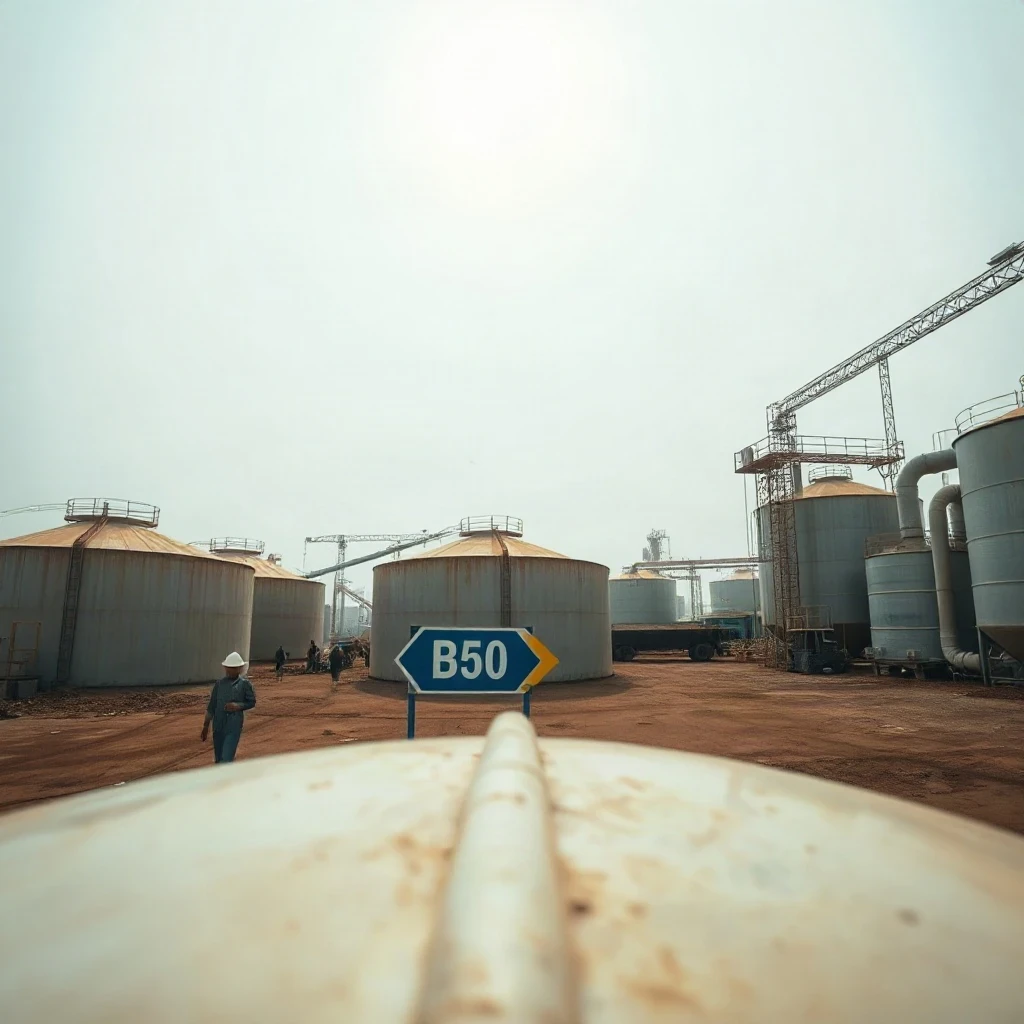
Indonesia's stepped-up promotion of its B50 biodiesel program is drawing fresh attention from market participants, with industry groups and equipment suppliers signaling readiness for higher blend rates. Recent outreach efforts, including educational campaigns and the development of Caterpillar machinery for B50 use, point to a coordinated push toward implementation. For palm oil traders, the key question is how quickly mandatory blending translates into additional domestic consumption, a factor that could tighten export availability.
Analysts remain broadly constructive on crude palm oil (CPO) prices, citing firm biodiesel demand as a key support. Malaysian benchmark futures traded around $1,158 per metric ton on August 24, up 1.2% on the session, while our model outlook flags a 4.6% gain over the past seven days, placing prices near the top of their 52-week range. The wide spread between soybean oil and palm oil, combined with high Indonesian export levies and duties, continues to make palm an attractive feedstock for biodiesel producers.
However, supply-side fundamentals may temper runaway gains. Malaysia's July data showed CPO production rising 9.4% month-on-month to 1.79 million tons, with closing stocks up 7.2% to 1.43 million tons. Peak production season is underway, and export volumes did climb 14.5% month-on-month to 1.39 million tons, but the inventory build suggests ample near-term availability.
El Niño conditions, with an ONI of +1.4, are bringing dry weather to key growing regions in Sarawak and Kalimantan. This could pressure yields in coming months, potentially tightening supply later in the year. For now, though, the market appears well supplied, and our model outlook anticipates a modest pullback over the next seven sessions as profit-taking and seasonal softness offset bullish headlines. The RSI at 78 and price above the upper Bollinger Band underscore overbought conditions.
Compliance-minded buyers should monitor Indonesia's B50 implementation timeline closely. Any acceleration in blending mandates would increase domestic palm oil absorption, reducing exportable surplus and potentially lifting global prices. Conversely, delays could ease supply concerns. With Brent crude around $93 per barrel, biodiesel economics remain favorable, supporting the case for higher blend rates. As always, the interplay between policy signals and weather patterns will be critical in shaping price direction over the next quarter.
Import appetite stays steady as peak production weighs on prices; currency and duty factors shape near-term buying.

China, the world's second-largest palm oil importer, remains a steady buyer even as global supply dynamics shift. The latest Malaysian data for July 2026 shows exports rising 14.5% month-on-month to 1.39 million tonnes, a sign that key Asian destinations, including China, are absorbing shipments ahead of seasonal demand peaks. Port inventories in China are reportedly sufficient for near-term needs, but traders note that restocking ahead of major festivals typically supports import flows into the fourth quarter.
Benchmark Malaysian crude palm oil (CPO) settled around $1,158 per tonne, up 1.2% on the session, while the global World Bank benchmark sits near $1,101. The wide spread between palm and soybean oil remains a key factor for Chinese refiners, who often switch between the two based on relative value. With soybean oil futures on the Dalian exchange under their own supply pressures, palm's discount keeps it attractive in food and industrial applications. That spread is expected to underpin import demand even if outright prices pull back.
The ringgit's level near 4.04 per dollar influences the landed cost of Malaysian palm for Chinese buyers. A softer ringgit makes Malaysian product more competitive versus Indonesian offers, though Indonesia's export levies and duties remain elevated, narrowing the gap. China's own import duty regime for palm oil is stable, with no new policy signals in the recent headlines. Macro demand signals, including food service and processed food output, remain moderate, consistent with a cautious but not contracting import appetite.
El Niño conditions (ONI +1.4) have brought dry weather to parts of Sarawak and Kalimantan, raising concerns about future production in Indonesia and parts of Malaysia. However, July MPOB data shows Malaysian CPO production rose 9.4% month-on-month, and closing stocks increased 7.2% to 1.43 million tonnes. Peak production season is underway, which could ease supply tightness in the near term. For China, this means ample availability for spot purchases, but weather risks into 2027 could prompt buyers to secure forward coverage.
Our model outlook suggests CPO has risen 4.6% over seven days and sits near the top of its 52-week range, with overbought signals (RSI 78, price above the upper Bollinger Band). We expect consolidation over the next seven sessions, with a modest pullback as profit-taking emerges. For China, that would offer a more attractive entry point for restocking. The key watch items are Dalian soybean oil futures, port inventory levels, and any policy moves on vegetable oil imports. China's demand is likely to remain resilient, driven by competitive pricing relative to soy oil and steady food-sector consumption.
Sources: South China Morning Post
Our market desk connects serious buyers with vetted origin suppliers across Southeast Asia. Indicative pricing, specifications and shipment guidance — free of charge.
Get connected →Malaysian benchmark $1,158/MT with ample July stocks and El Niño dryness; biodiesel levies and soy spread support, but RSI 78 hints consolidation.
Malaysian CPO ends week up for fifth straight session; MPOC sees prices above RM4,600 in September on tight supply.
Indonesia’s B50 push, export levy forecasts and equipment readiness point to tighter palm supply and firmer prices, nudging buyers to track compliance.
Biodiesel mandates and El Niño dry spells underpin prices, but ample stocks may temper gains.
Import appetite stays steady as peak production weighs on prices; currency and duty factors shape near-term buying.
Malaysian CPO is up 4.6% in seven days and near its 52-week high, but our model’s balance of factors gives the downside a 5-4 edge.
Malaysian crude palm oil benchmark is about $1,158/MT, or roughly RM4,684/MT, up 1.2% from the previous session. The wider market remains elevated: the World Bank palm oil benchmark is about $1,101/MT and Indonesia’s Kemendag reference price is about $997/MT. Against a softer Brent crude price of about $93/bbl and a USD/MYR rate of about 4.04, the Malaysian contract is near the top of its 52-week range after a 4.6% gain over the past seven days.
The largest structural support is the soy-palm spread. Soybean oil is quoted at about $1,506/MT, leaving palm at a discount of about $346/MT. That discount is wide enough to encourage price-sensitive buyers to switch demand into palm oil for food and industrial use, which keeps physical offtake active even as prices rise.
Indonesian export policy is also squeezing trade. The August reference price of $997/MT triggers a $125/MT export levy plus a $148/MT export duty, a combined $273/MT charge on Indonesian shipments. That makes Indonesian cargoes relatively less competitive and shifts marginal demand toward Malaysian supply, tightening the pool of cheaper exportable oil and supporting the Malaysian benchmark.
Biodiesel mandates continue to provide a demand floor. Indonesia’s B40 program is in force and B50 is being phased in, absorbing an estimated 3–4 million tonnes of palm oil per year that would otherwise compete for export demand. Weather adds a forward-looking risk premium: El Niño is strong at an ONI of +1.4, with dry conditions in Sarawak and Kalimantan. The anticipated 6–12 month lag to yield losses has not yet hit current supply, but it underpins sentiment for later in the crop year.
Technical indicators now point to exhaustion risk. RSI is at 78 and the price is above the upper Bollinger Band of about $1,144 after five consecutive higher sessions. That extension after a 4.6% seven-day rally and a 5.2% thirty-day gain near the 52-week high makes profit-taking more likely than fresh buying at these levels.
Fundamental supply is also building. July MPOB closing stocks rose 7.2% month on month to 1,429,316 tonnes, 61% above the five-year average, with a stocks-to-use ratio of 12.5%. Production rose 9.4% month on month to 1,792,979 tonnes, and the seasonal path points to another 7.0% increase next month. July exports did rise 14.5% month on month, but that was not enough to stop inventories from accumulating. The July-to-October peak output window means more fresh supply is entering the market at exactly the time the rally is technically overbought.
Speculative positioning adds downside asymmetry. CFTC soyoil net length is +98,237 contracts, in the 82nd percentile historically, leaving the broader vegetable oil complex vulnerable to long liquidation. Brent crude’s 0.5% dip to about $93/bbl does not reinforce the biodiesel demand story, and India’s festival imports at a 10-month high remain a neutral factor because the pre-Diwali window has historically shown no reliable price lift.
Our model’s factor balance is four bullish against five bearish, so the downside currently has the upper hand. The bullish supports—soy discount, Indonesian export taxes, biodiesel demand, and El Niño—are real but are being outweighed by overbought technicals, ample Malaysian stocks, peak production, and crowded speculative length. We expect the next seven days to consolidate with a modest pullback as profit-taking and September softness offset bullish headlines. Our published path is for a flat move over seven sessions, effectively a pause in the rally.
For the balance to flip, the market would need evidence that the supply side is tightening despite peak season. A surprise drawdown in Malaysian closing stocks, an abrupt disruption to July-to-October production, or faster confirmation of El Niño yield damage would remove the bearish edge. Alternatively, a further widening of the soy-palm spread, a new Indonesian export restriction, or a stronger biodiesel demand shock could overcome the current overbought setup. Until one of those shifts appears, the pullback risk is the dominant story.